
👆 Key Takeaways
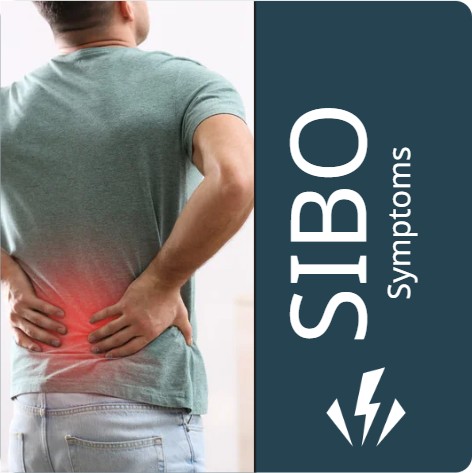
- Back pain is not one of the typical hallmark symptoms of SIBO. Symptoms such as abdominal bloating, abdominal pain, diarrhea, or constipation usually predominate.
- Nevertheless, digestion, the nervous system, and the back can interact. Visceral pain signals, pronounced abdominal bloating, and changes in posture may potentially influence back symptoms.
- New research has identified associations between gut dysbiosis and chronic back pain. However, this does not prove that SIBO causes back pain.
- Movement, heat, and relaxation can provide supportive relief for many forms of nonspecific back pain. At the same time, any existing SIBO should be specifically diagnosed and treated.
✔ Quality Checked:
This article is based on medical guidelines, scientific studies, and specialist publications. Medical content should undergo professional review before publication and be updated regularly. Medical Disclaimer: This article provides general information and does not replace medical diagnosis or treatment. New, severe, persistent, or unusual back pain should be assessed by a healthcare professional.
Back Pain with SIBO: The Connection, Possible Causes, and What May Help
2. Can SIBO and Back Pain Be Connected?
3. The Gut, Nervous System, Vagus Nerve, and Spine
4. Abdominal Bloating, the Diaphragm, and Lower Back Pain
5. Nutrient Deficiencies, the Intestinal Barrier, and Inflammation
6. What Does the Research Say?
7. Musculoskeletal or Gut-Related Back Pain?
8. What Can You Do About Back Pain and SIBO?
1. What Is SIBO?
 SIBO stands for “Small Intestinal Bacterial Overgrowth” and is commonly referred to in German as “Dünndarmfehlbesiedlung”. In a healthy digestive system, the large intestine contains significantly more microorganisms than the small intestine. In SIBO, the small intestine becomes excessively or abnormally populated with microorganisms. As a result, increased carbohydrate fermentation can occur within the small intestine.
Typical symptoms may include:
 Gas and abdominal bloating
- Abdominal pain, a feeling of pressure, or cramping
- Diarrhea
- Constipation
- A feeling of fullness, nausea, or increased belching
However, these symptoms are not specific to SIBO. Similar symptoms may occur, for example, in irritable bowel syndrome, food intolerances, or other gastrointestinal conditions.
SIBO and irritable bowel syndrome can also overlap. Studies show that positive SIBO tests may be more common in people with irritable bowel syndrome than in healthy controls. However, the findings vary considerably depending on the testing method used. SIBO and irritable bowel syndrome should therefore not be considered the same condition. [6]
1.1 How Is SIBO Diagnosed?
Hydrogen and methane breath tests are commonly used for diagnosis. Following standardized preparation, patients usually drink a solution containing lactulose or glucose. Hydrogen and, where applicable, methane are then measured in exhaled breath over a specified period. [1,3] These gases are produced by microbial metabolic processes and reach the lungs through the bloodstream. Important: A breath test cannot identify the specific bacterial species present in the small intestine. Lactose or fructose breath tests are primarily used to investigate malabsorption of the respective carbohydrate and should not be confused with a standard SIBO breath test.
1.2 How Is SIBO Treated?
SIBO treatment should be tailored to the individual. In addition to current symptoms, a key consideration is why the overgrowth developed. Possible contributing factors include altered gastrointestinal motility, anatomical changes, or other medical conditions. Medical treatment options for SIBO may include antibiotics. Depending on the situation, dietary measures and treatment of possible nutrient deficiencies may also form part of the treatment plan. [2] Herbal antimicrobial preparations, probiotics, and specific dietary approaches are also used. However, the scientific evidence varies depending on the intervention, so individualized professional guidance is advisable.
2. Can SIBO and Back Pain Be Connected?
Back pain is not one of the typical hallmark symptoms of SIBO. Nevertheless, some people with pronounced digestive problems also report feelings of tension or pain in the back, particularly in the lumbar spine region. However, this does not automatically mean that SIBO is causing the symptoms. Back pain is very common and can have many different physical causes. These include muscle tension, inappropriate or excessive loading, a lack of physical activity, and changes affecting the joints or spine. At the same time, there are close connections between the digestive tract, nervous system, and pain processing. Several mechanisms may therefore allow abdominal symptoms to influence the perception of back symptoms.
3. The Gut, Nervous System, and Spine: How Visceral Pain Develops
The digestive tract has its own complex nervous system and communicates continuously with the central nervous system. Stimuli from the stomach and intestines, such as stretching, inflammation, or other physical changes, travel through sensory nerve fibers to the spinal cord and then to the brain. Signals from internal organs can sometimes converge on nerve cells that also process information from the skin, muscles, and other bodily structures. As a result, pain may, in certain situations, be perceived somewhere other than exclusively at the site where the original stimulus arises. This phenomenon is referred to as referred or visceral pain. [4] Such mechanisms are known in various areas of medicine and illustrate how closely internal organs and the nervous system are connected. However, for SIBO, the following distinction is important: This mechanism explains, in general terms, why symptoms originating in internal organs may be perceived in other parts of the body. It does not prove that SIBO directly causes back pain. There is another possible connection: people who consistently adopt a protective posture because of abdominal pain or pronounced bloating may unconsciously change their body alignment. This can alter the load on the muscles around the abdomen, pelvis, and spine. Under certain circumstances, existing back pain may become worse.
3.1 What Role Does the Vagus Nerve Play?
The vagus nerve is an important component of the gut–brain axis and mediates part of the two-way communication between the digestive tract and the brain. Among other functions, it participates in the regulation of digestion, autonomic responses, and immune signaling pathways. Altered vagal tone is being investigated in various functional gastrointestinal disorders. However, this does not mean that an “irritated vagus nerve” directly causes SIBO-related back pain. It is more useful to view the vagus nerve as one component of the complex communication between the gut, nervous system, and pain processing. [7,8]
4. Abdominal Bloating and Lower Back Pain: What Role Do the Diaphragm and Lumbar Spine Play?
In SIBO, microorganisms can ferment carbohydrates. This process produces gases, among other substances, which can lead to pronounced abdominal bloating. The intestines become distended as a result. This stretching can activate sensory nerve fibers and be perceived as pressure, tension, or pain. People with increased visceral sensitivity may be particularly sensitive to such physical stimuli. Changes in the processing of signals from the digestive tract also play a role in irritable bowel syndrome. A very tense abdomen can additionally affect posture. The abdominal muscles, diaphragm, pelvic floor, and back muscles work together during breathing, movement, and stabilization of the body. People who draw in their abdomen, bend their upper body forward, or avoid physical movement because of uncomfortable bloating may alter muscle tension around the spine.
4.1 Diaphragm Function and Breathing Mechanics
The diaphragm is not only the main breathing muscle. Together with the abdominal muscles and pelvic floor, it also helps regulate intra-abdominal pressure and thereby contributes to trunk stabilization. Studies in people with chronic lower back pain suggest that diaphragm function and mobility may be associated with lumbar stability. [9,10]
A very tense or bloated abdomen can make abdominal breathing feel more difficult. People who then persistently draw in their abdomen, breathe more shallowly, or adopt a protective posture may alter the coordination between the diaphragm, abdominal wall, and back extensors. This can change the muscular load on the lumbar spine. This does not mean that bloating automatically causes back pain. However, when abdominal bloating and lower back pain occur together, breathing and trunk mechanics are a plausible additional factor.
4.2 Gastrointestinal Symptoms and Back Pain in the Lumbar Region
If gastrointestinal symptoms and back pain in the lumbar region regularly occur together, it is worth observing their timing: does the pain occur mainly after meals? Does it increase alongside bloating? Does lower back tension change after a bowel movement or passing gas? Such patterns may provide clues, but they do not replace an orthopedic or gastroenterological assessment.
Possible signs that digestion may be contributing include:
- Back pain and abdominal bloating regularly occur at the same time.
- Symptoms become worse after certain meals.
- Back and abdominal symptoms increase together.
- Symptoms may improve after passing gas or having a bowel movement.
Such observations can be helpful, but they do not replace a medical diagnosis.
4.3 The Anatomical Connection: Intestinal Suspension, the Mesenteric Root, and the Iliopsoas
The intestines do not lie in isolation within the abdominal cavity. The mobile sections of the small intestine, the jejunum and ileum, are suspended from the posterior abdominal wall by the mesentery. This double layer of peritoneum contains connective tissue, blood and lymphatic vessels, and nerves. Its line of attachment to the posterior abdominal wall is known as the radix mesenterica or radix mesenterii, meaning the root of the mesentery. It runs obliquely from the junction between the duodenum and jejunum in the upper left to the region where the small and large intestines meet in the lower right, passing in front of structures including the right psoas major muscle. The entire intestine is therefore not attached to the same mesenteric root. [14,15]
When the intestines become markedly distended, mechanical stress may affect not only the intestinal wall but also the supporting structures. Traction and stretching in the mesentery can, in principle, act as visceral pain stimuli. However, this does not establish that ordinary bloating automatically exerts significant traction on the lumbar spine or directly irritates the neighboring hip flexor. Specific evidence for this type of mechanical cause of back pain in SIBO is lacking. [4]
Another anatomical connection arises from the close spatial relationship between the intestines and the iliopsoas muscle. This powerful and important hip flexor consists of the psoas major and iliacus muscles. The psoas major originates in the lower thoracic and lumbar spine region, including the vertebral bodies, intervertebral discs, and transverse processes. The iliacus, by contrast, originates on the inner surface of the pelvis. Both extend to the femur. The iliopsoas therefore functionally connects the lumbar and pelvic region with the hip joint; the psoas major in particular also contributes to the control and stabilization of the lumbar spine. [16]
Parts of the intestines lie in front of the iliopsoas or psoas major. Depending on the region, the intervening tissues include the peritoneum, connective tissue, and the fascia surrounding the muscle. This proximity explains why disease processes in neighboring organs can, in principle, also affect the psoas. Direct involvement is possible, for example, in certain inflammatory conditions; however, this should not be equated with ordinary abdominal bloating. [17]
With bloating and abdominal pain, an indirect functional connection is conceivable: a pain-related protective posture with the hips flexed may alter the coordination between the hip flexors, abdominal muscles, and back muscles. Any accompanying increased tension or tenderness of the iliopsoas can therefore be considered when assessing hip and lumbar spine symptoms. However, anatomical proximity alone proves neither direct muscle irritation by intestinal gas nor that SIBO is the cause of the back pain.
5. Small Intestinal Bacterial Overgrowth and Back Pain: Nutrient Deficiencies, the Intestinal Barrier, and Low-Grade Inflammation
5.1 Secondary Nutrient Deficiencies Due to Malabsorption
In pronounced SIBO, the absorption of certain nutrients may be impaired. Specialist publications describe vitamin B12 deficiency, changes affecting fat-soluble vitamins, and other vitamin and mineral deficiencies, among other findings. [2,11,12] Vitamin D deficiency can be associated with musculoskeletal symptoms; magnesium deficiency can also contribute to muscle cramps or neuromuscular symptoms. However, it is important to note that neither magnesium deficiency nor vitamin D deficiency specifically proves the presence of SIBO, and back pain cannot automatically be explained by these deficiencies. Targeted laboratory testing may be appropriate when there is persistent malabsorption, weight loss, or pronounced symptoms.
5.2 Impaired Intestinal Barrier Function and Low-Grade Inflammation
The popular term “leaky gut” usually refers to increased intestinal permeability, meaning impaired intestinal barrier function. When the intestinal barrier is compromised, bacterial components and metabolic products may come into contact with the immune system more readily and activate inflammatory signaling pathways. This type of systemic, low-level inflammatory activity, known as low-grade inflammation, is being investigated as a possible mechanism in various diseases. [13]
Connections between the gut microbiome, inflammatory processes, and pain processing are also being studied in chronic back pain. However, for SIBO specifically, it has not yet been established that increased intestinal permeability or bacterial metabolic products directly cause chronic back or joint pain. This connection should therefore be understood as a possible biological mechanism, rather than an established cause.
6. What Does the Research Say About Gut Dysbiosis and Back Pain?
The possible connection between the gut microbiome, inflammation, the nervous system, and chronic pain is attracting increasing scientific attention. A preliminary cross-sectional study published in 2026 examined the gut microbiome of people with chronic axial back pain and compared it with that of healthy controls. [5] The researchers found differences in certain microbial patterns. These were interpreted as a possible proinflammatory and pronociceptive signature, meaning a pattern that could theoretically be associated with inflammatory and pain-related processes.
However, the following points are particularly important when interpreting these findings:
- The study investigated gut dysbiosis and chronic back pain.
- It did not specifically investigate SIBO.
- A cross-sectional study can identify associations, but it cannot prove a cause-and-effect relationship.
It is therefore currently unclear whether certain changes in the gut microbiome cause back pain, result from other physical processes, or simply occur at the same time. The research is interesting, but it does not provide direct scientific evidence that SIBO causes chronic back pain.
7. Musculoskeletal or Gut-Related Back Pain?
Back pain can have many different causes. The following comparison may help put typical patterns into context. It is explicitly not intended for self-diagnosis.
| Feature | More Suggestive of a Musculoskeletal / Orthopedic Cause | Potentially Influenced by Digestive Symptoms |
|---|---|---|
| Possible triggers | Muscle overload, inappropriate or excessive loading, changes affecting the joints or spine | Pronounced abdominal bloating, visceral stimuli, altered muscle tension, or a protective posture |
| Pain pattern | Often influenced by particular movements, postures, or physical loads | May coincide with meals, bloating, or other digestive symptoms |
| Accompanying symptoms | Localized muscle tension, restricted movement, and possibly radiating pain | Abdominal bloating, a feeling of fullness, abdominal pain, diarrhea, or constipation |
| Possible relief | Appropriate movement, changes in position, heat, or physiotherapy | Sometimes improves as bloating subsides or after a bowel movement; gentle movement may also feel helpful |
Important: Both forms can occur at the same time. For example, people who become less physically active or adopt a protective posture because of severe digestive symptoms may also develop muscular back pain.
8. What Can You Do About Back Pain and SIBO?
When back symptoms regularly occur alongside digestive problems, neither the gut nor the spine should automatically be considered the sole cause. It makes sense to consider both areas.
8.1 Have SIBO Specifically Assessed and Treated
If typical symptoms such as pronounced abdominal bloating, abdominal pain, diarrhea, or constipation are present, it should be established whether SIBO is actually involved. Targeted treatment of small intestinal bacterial overgrowth may help reduce digestive symptoms. Where possible, treatment should address not only the bacterial overgrowth itself but also its underlying cause. Depending on the findings, treatment may include medications such as certain antibiotics, an individually tailored diet, and correction of confirmed nutrient deficiencies. Dietary measures can reduce symptoms, but they do not necessarily eliminate the cause of the overgrowth. The most appropriate treatment should therefore be determined according to the individual situation.
8.2 Observe Patterns and Connections
A symptom diary can help identify patterns.
For example, you can record:
- When does the back pain occur?
- Is abdominal bloating present at the same time?
- Do symptoms become worse after certain meals?
- Does the pain change after a bowel movement?
- What effect do movement and rest have?
- Are there any other physical symptoms?
This information can also be helpful during a medical consultation.
8.3 Keep Moving
For many forms of nonspecific back pain, appropriate physical activity is more beneficial than prolonged complete rest. Walking, gentle mobility exercises, or individually suitable yoga exercises can keep the muscles moving while also supporting bowel motility. However, the most suitable type of movement depends on the cause and severity of the symptoms.
8.4 Use Heat
Heat can feel soothing for tense back muscles and promote relaxation. However, it does not treat SIBO and should be regarded only as a supportive measure.
8.5 Relaxation, Breathing, and Osteopathic / Physiotherapy Approaches
Stress can influence both muscle tension and communication within the gut–brain axis. Calm breathing exercises, relaxation techniques, and gentle physical activity may therefore be helpful when symptoms are accompanied by pronounced physical tension. Some people also find gentle abdominal massage soothing for bloating. However, severe, unexplained, or newly developing abdominal pain should first be medically assessed to determine its cause. Depending on the findings, physiotherapy may also be useful for pronounced muscle tension or restricted mobility. Some people additionally consult an osteopath or receive osteopathic treatment. However, there is insufficient evidence that osteopathic techniques are specifically effective for SIBO itself. Such measures should therefore be understood as complementary treatment for muscular or functional symptoms, rather than as a substitute for targeted SIBO diagnosis and treatment.
When Should Back Pain Be Medically Assessed?
A medical assessment is particularly advisable when back pain:
- is new and unusually severe,
- persists for an extended period or becomes noticeably worse,
- is accompanied by fever or unexplained weight loss,
- occurs after an accident or fall,
- is associated with marked numbness or signs of paralysis.
New bladder or bowel dysfunction occurring alongside back symptoms should receive prompt medical assessment.
9. Glossary: Important Terms
Glossary: Understanding SIBO & Back Pain
- SIBO
- Abbreviation for “Small Intestinal Bacterial Overgrowth”. In German, the condition is commonly called “Dünndarmfehlbesiedlung.”
- Dysbiosis
- A change in the composition or function of a microbial community. Dysbiosis does not automatically mean SIBO.
- Visceral Pain
- Pain originating in internal organs such as the stomach or intestines. These stimuli are processed through the nervous system and may sometimes be perceived in other parts of the body.
- Gut–Brain Axis
- The two-way communication between the digestive tract and the brain. It involves the nervous system, immune system, and metabolic processes, among other factors.
- Visceral Hypersensitivity
- Increased sensitivity to stimuli from internal organs. As a result, intestinal stretching or gas production may be perceived particularly intensely.
- Irritable Bowel Syndrome
- A chronic disorder of gut–brain interaction that may involve abdominal pain, bloating, and altered bowel habits, among other symptoms. Irritable bowel syndrome is not the same as SIBO.
- Lumbar Spine
- The lower section of the spine. Pain in this area is commonly referred to as low back pain or lower back pain.
- IMO
- “Intestinal Methanogen Overgrowth.” This term describes increased methane production by methane-producing microorganisms in the digestive tract.
10. Summary
- Back pain is not a classic symptom of SIBO.
- The digestive tract, spinal cord, and brain are connected through the nervous system.
- A markedly bloated abdomen may potentially influence back symptoms through visceral stimuli, muscle tension, and changes in posture.
- Altered diaphragm function and breathing mechanics may also influence trunk and lumbar loading when bloating is pronounced.
- Pronounced SIBO can involve malabsorption and nutrient deficiencies; these should be specifically investigated when there are relevant signs.
- Increased intestinal permeability and low-grade inflammation are biologically plausible research avenues, but a direct causal relationship with SIBO-related back pain has not been established.
- Current research has identified associations between gut dysbiosis, inflammation, and chronic back pain. However, these findings do not yet establish a direct cause-and-effect relationship involving SIBO.
- When digestive and back symptoms occur together, both the gut and the musculoskeletal system should be considered.
- Gentle movement, heat, and relaxation may provide supportive relief, but they do not replace targeted diagnostic assessment.
11. FAQs
Can Abdominal Bloating Really Cause Back Pain?
Pronounced abdominal bloating can occur at the same time as back symptoms. Possible factors include increased stretching of the digestive tract, visceral pain signals, altered muscle tension, and unconscious changes in posture. However, this does not automatically mean that bloating is the cause of the back pain. Other causes should be investigated, particularly if symptoms persist.
Is Back Pain a Typical Symptom of SIBO?
No. Typical SIBO symptoms primarily include bloating, abdominal pain or discomfort, and changes in bowel habits. Back pain is not a classic diagnostic hallmark. An indirect connection through the nervous system, posture, or severe digestive symptoms is conceivable, but back pain has not been scientifically established as a typical SIBO symptom.
Where Can Gut-Related Back Pain Occur?
Because of the way they are processed in the nervous system, visceral pain signals from internal organs may sometimes be projected to other parts of the body. Some people with severe digestive symptoms also report pain in the lower back or lumbar spine region. However, the location of the pain alone cannot reliably determine whether its cause lies in the gut.
Can Small Intestinal Bacterial Overgrowth Cause Pain in the Lumbar Region?
A direct cause-and-effect relationship has not been established. However, small intestinal bacterial overgrowth can be accompanied by abdominal bloating, visceral stimuli, altered posture, and, in some cases, malabsorption. These factors may potentially influence symptoms in the lumbar region. Persistent or severe back pain should be medically assessed regardless.
What Do Abdominal Bloating and the Diaphragm Have to Do with Lower Back Pain?
The diaphragm contributes not only to breathing but also to trunk stabilization. A very tense abdomen can make abdominal breathing feel more difficult and lead to changes in breathing or posture. This may alter muscle tension in the lower back. It is a possible biomechanical connection, but it does not prove that bloating is causing the back pain.
Can Nutrient Deficiencies in SIBO Worsen Back or Muscle Pain?
Pronounced SIBO can lead to malabsorption and certain vitamin or mineral deficiencies. Deficiencies that affect muscle or bone health can, in principle, contribute to symptoms. However, whether a specific deficiency is present can only be established through targeted medical assessment.
SIBO Academy® Newsletter
Get the latest updates from the world of SIBO delivered straight to your inbox for free
12. Sources
- Rezaie, A., Buresi, M., Lembo, A., Lin, H., McCallum, R., Rao, S., Schmulson, M., Valdovinos, M., Zakko, S., & Pimentel, M. (2017). Hydrogen and Methane-Based Breath Testing in Gastrointestinal Disorders: The North American Consensus. American Journal of Gastroenterology, 112(5), 775–784.
https://doi.org/10.1038/ajg.2017.46 - Quigley, E. M. M., Murray, J. A., & Pimentel, M. (2020). AGA Clinical Practice Update on Small Intestinal Bacterial Overgrowth: Expert Review. Gastroenterology, 159(4), 1526–1532.
https://doi.org/10.1053/j.gastro.2020.06.090 - Hammer, H. F., Fox, M. R., Keller, J., et al. (2022). European guideline on indications, performance, and clinical impact of hydrogen and methane breath tests in adult and pediatric patients. United European Gastroenterology Journal, 10(1), 15–40.
https://doi.org/10.1002/ueg2.12133 - Chichlowski, M., & Rudolph, C. (2015). Visceral Pain and Gastrointestinal Microbiome. Journal of Neurogastroenterology and Motility, 21(2), 172–181.
https://pmc.ncbi.nlm.nih.gov/articles/PMC4398233/ - Saravanan, A., Bai, J., Bajaj, P., et al. (2026). Evidence for a shift towards a proinflammatory/pronociceptive signature of gut dysbiosis in patients with axial chronic low back pain: A preliminary cross-sectional analysis. The Journal of Pain, 44, 106271.
https://pubmed.ncbi.nlm.nih.gov/41997470/ - Shah, A., Talley, N. J., Jones, M., et al. (2020). Small Intestinal Bacterial Overgrowth in Irritable Bowel Syndrome: A Systematic Review and Meta-Analysis of Case-Control Studies. American Journal of Gastroenterology, 115(2), 190–201.
https://doi.org/10.14309/ajg.0000000000000504 - Bonaz, B., Bazin, T., & Pellissier, S. (2018). The Vagus Nerve at the Interface of the Microbiota-Gut-Brain Axis. Frontiers in Neuroscience, 12, 49.
https://pubmed.ncbi.nlm.nih.gov/29593576/ - Mogilevski, T. (2021). The bi-directional role of the gut-brain axis in inflammatory and other gastrointestinal diseases. Current Opinion in Gastroenterology, 37(6), 572–577.
https://pubmed.ncbi.nlm.nih.gov/34519701/ - Ma, B., et al. (2026). Diaphragmatic dysfunction and activation interventions for chronic nonspecific low back pain: A systematic review and meta-analysis. Journal of Back and Musculoskeletal Rehabilitation.
https://pubmed.ncbi.nlm.nih.gov/41662208/ - Kolar, P., et al. (2012). Postural function of the diaphragm in persons with and without chronic low back pain. Journal of Orthopaedic & Sports Physical Therapy, 42(4), 352–362.
https://pubmed.ncbi.nlm.nih.gov/22236541/ - Losurdo, G., et al. (2020). The Influence of Small Intestinal Bacterial Overgrowth in Digestive and Extra-Intestinal Disorders. International Journal of Molecular Sciences, 21(10), 3531.
https://pubmed.ncbi.nlm.nih.gov/32429454/ - Saltzman, J. R., & Russell, R. M. (1994). Nutritional consequences of intestinal bacterial overgrowth. Comprehensive Therapy, 20(9), 523–530.
https://pubmed.ncbi.nlm.nih.gov/7805370/ - Camilleri, M., et al. (2023). Gut microbiota, intestinal permeability, and systemic inflammation: a narrative review. Internal and Emergency Medicine.
https://pubmed.ncbi.nlm.nih.gov/37505311/ - Radiopaedia. Root of the mesentery. Anatomical overview of the mesenteric root and its anatomical relationships.
https://radiopaedia.org/articles/root-of-the-mesentery - Kenhub. Mesentery: Anatomy, functions and clinical points.
https://www.kenhub.com/en/library/anatomy/mesentery - Radiopaedia. Psoas major muscle. Anatomy, origin, insertion, and function.
https://radiopaedia.org/articles/psoas-major-muscle-1 - European Society of Radiology, EPOS. Anatomy, pathology, imaging and intervention of the iliopsoas muscle. ECR 2006, C-578.
https://epos.myesr.org/poster/esr/ecr2006/C-578/background