
👆 Key Points at a Glance
- Candida is not automatically pathological: Yeasts of the genus Candida can colonize the skin, mouth, gut, and genital area without causing symptoms.1
- Candida symptoms depend on the affected area of the body: Oral thrush, vulvovaginal candidiasis, cutaneous candidiasis, and invasive candidiasis have different clinical signs.2
- Bloating or abdominal pain are not specific to Candida: Especially in the gut, symptoms overlap with SIBO, irritable bowel syndrome, intolerances, and other causes.6
- Detecting Candida in stool does not prove SIFO: Small intestinal fungal overgrowth cannot be diagnosed with a simple Candida stool test.67
- Antifungal medications should be used in a targeted way: Which medications are appropriate depends on the site of infection, Candida species, and the individual situation.
- A strict Candida diet is not a proven standard therapy: A balanced diet can be helpful; a specific “anti-Candida effect” of restrictive diets has not been clinically demonstrated.910
✔ Evidence-based:
This article is based on medical specialist sources, guidelines, reviews, and prescribing information. Especially when it comes to “Candida in the gut,” it is important to clearly distinguish between normal colonization, local infection, SIFO, and invasive candidiasis.1,5,6
Candida Symptoms: From Gut to Skin – Causes, Facts & Diagnosis
Symptoms of Candida infections can vary greatly depending on the affected body region. What matters is which area of the body is affected – and whether there is actually a fungal infection that requires treatment. Candida can colonize the skin and mucous membranes without causing disease.
In this guide, you will learn which symptoms can actually be consistent with candidiasis, when a Candida detection is medically relevant, what role the gut and the so-called gut flora play, and how SIFO can be distinguished from SIBO.
1. What is Candida? Colonization or infection?
2. Causes and risk factors
3. Candida symptoms by body region
4. Candida in the gut: symptoms, SIFO, and SIBO
5. Diagnosis: How can Candida be detected appropriately?
6. Treatment: Targeted use of antifungals
7. Diet and the Candida diet: What makes sense?
8. Candida “die-off”: What is behind it?
9. Candida albicans, glabrata, and auris
10. When to see a doctor? Self-check & warning signs
11. FAQ: Common questions about Candida symptoms
12. Golden rules when Candida is suspected
13. Glossary: Important terms related to Candida
14. Conclusion
15. Sources
1. What is Candida? Colonization or infection?
Candida refers to a group of yeasts. Various Candida species can occur on the skin and mucous membranes of healthy people – for example in the mouth, digestive tract, or genital area. Detection alone therefore does not mean that a disease is present.114
Terminology is also important: Candida belongs to the yeasts and not to the classic molds. Although both belong to the kingdom of fungi, they are medically distinct groups.
The medically decisive distinction is between colonization and candidiasis. Candidiasis is one of the so-called mycoses, i.e. fungal infections. For a diagnosis, symptoms, examination findings, the affected body region and – depending on the situation – microbiological findings must fit together.
Candida: A resident, not automatically a disease
- Colonization: Candida is present but does not cause disease.
- Local candidiasis: The fungus causes an infection of the skin or mucous membranes, for example oral thrush or vulvovaginal candidiasis.
- Invasive candidiasis: Candida enters the bloodstream or internal organs. This predominantly affects severely ill or immunocompromised people in high-risk medical settings.15
- SIFO: A concept described in the scientific literature involving an increased fungal burden in the small intestine. It must be distinguished from normal Candida colonization of the digestive tract; standardized, widely established diagnostic protocols are still lacking.67
The popular term “Candida Overgrowth”, on the other hand, is often used very broadly. A general “Candida syndrome” that is supposed to broadly explain fatigue, cravings, mood swings, skin problems, and digestive symptoms in otherwise healthy people is not clinically established as a uniform diagnosis.
2. Causes and risk factors
Whether Candida becomes problematic depends strongly on the body region and the individual risk profile. Well-established factors include certain medications such as antibiotics or corticosteroids, impaired immune defenses, diabetes, pregnancy, and certain medical treatments.3
| Area | Typical or well-established risk factors |
|---|---|
| Mouth and throat | Inhaled or systemic corticosteroids, antibiotics, dentures, dry mouth, smoking, diabetes, and immunosuppression.3 |
| Vulva and vagina | Pregnancy, hormonal influences, diabetes, immunosuppression, as well as current or recent antibiotic use.3 |
| Skin folds | Moisture, friction, occlusive clothing, diabetes, obesity, and immunosuppression.15 |
| Invasive candidiasis | Intensive care treatment, central venous catheters, major surgery, parenteral nutrition, broad-spectrum antibiotics, chemotherapy, and severe immunosuppression.35 |
What role does sugar play?
The simplified statement “Sugar feeds Candida and therefore causes a Candida infection” cannot be derived from human studies. In a small controlled study in healthy individuals, a greatly increased intake of refined carbohydrates had only a limited overall effect on Candida colonization.10
This must be distinguished from diabetes or poor blood sugar control: Diabetes is an established risk factor for various Candida infections.3 Reducing added sugar and highly processed foods can therefore make sense for general nutritional-medical reasons – but a Candida infection can neither be diagnosed nor specifically “starved out” this way. You can also find more on this topic in this  article.
3. Candida symptoms by body region
There is no “single Candida symptom.” Which symptoms occur depends largely on which region of the body is affected.2
| Body region | Possible Candida symptoms | Important context |
|---|---|---|
| Mouth & throat | White patches, redness, burning, soreness, changes in taste, difficulty swallowing. | Consistent with oral thrush; recurrent or pronounced thrush in adulthood should be medically evaluated.23 |
| Vulva & vagina | Itching, burning, redness, soreness, pain, and altered discharge. | Other infections and skin conditions can look similar.418 |
| Skin & skin folds | Marked redness, sore or weeping-looking skin, small peripheral papules or pustules. | Eczema, psoriasis, and other fungal infections can look similar.15 |
| Gut / possible SIFO | Bloating, fullness, abdominal pain, nausea, belching, diarrhea, or altered bowel habits. | Nonspecific: substantial overlap with SIBO, irritable bowel syndrome, and other gastrointestinal disorders.6 |
| Invasive candidiasis | Fever, chills, and severe systemic symptoms. | Primarily in severely ill or immunocompromised people; high-risk medical context.25 |
Mouth, tongue, and throat: Oral thrush
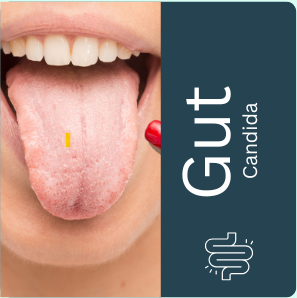
- Patches: whitish, sometimes wipeable patches on the tongue, inner cheeks, palate, or throat.
- Irritation: redness, burning, or soreness.
- Mouth sensation: a furry or “cottony” feeling.
- Taste: changes in taste or loss of taste.
- Eating and swallowing: pain when eating or swallowing.
- Corners of the mouth: cracked and reddened corners of the mouth.2
Oral thrush occurs particularly in the presence of certain risk factors, such as after antibiotics, with inhaled or systemic corticosteroids, dentures, dry mouth, diabetes, or impaired immune defenses. Recurrent or pronounced symptoms in adulthood should therefore be medically evaluated.3
Genital area: Vulvovaginal candidiasis
- Itching: often around the vulva and vaginal opening.
- Inflammation: burning, soreness, redness, or swelling.
- Pain: for example during sexual intercourse.
- Urination: burning or other discomfort may occur.
- Discharge: may be altered and is often whitish.418
Important: These symptoms are not specific to Candida. Bacterial vaginosis, sexually transmitted infections, contact reactions, and skin disorders can look similar. An examination is advisable for first-time, severe, recurrent symptoms, or symptoms that do not respond to correct treatment.
Inflammation of the glans and foreskin can, among other things, be caused by Candida. However, redness, itching, burning, or irritated skin are not specific and may have other causes. In cases of pronounced, recurrent, or unclear symptoms, a medical examination is advisable.19
Candida in urine: Not automatically a bladder infection
Candida in urine is often a colonization rather than a urinary tract infection requiring treatment, especially in people with catheters, diabetes, advanced age, or after antibiotics. Asymptomatic candiduria is generally not treated. Exceptions include certain high-risk groups and before selected urological procedures.5
Skin and skin folds
Candida can cause an infection particularly in warm, moist skin folds, for example under the breasts, in the groin, between the buttocks, or in the armpits. Typical findings can include intensely reddened, sore, or weeping-looking areas with small peripheral papules or pustules – so-called satellite lesions.15
However, eczema, psoriasis, bacterial infections, dermatophyte infections, and simple intertrigo can look similar. Pictures on the internet are therefore not sufficient for a reliable diagnosis.
Scalp and nails: Do not assume Candida too quickly
Dandruff, hair loss, and nail changes can have many possible causes. Candida is not automatically the most likely explanation. A dermatological assessment is therefore advisable before using antifungal medications.
Fatigue, “brain fog,” and psychological symptoms
Fatigue, concentration problems, dizziness, sleep disturbances, depressed mood, muscle or joint pain, and cravings are not reliable hallmark symptoms of an ordinary Candida infection. Such symptoms can have many causes, but they may nevertheless be related to Candida.
Invasive candidiasis, by contrast, can cause severe systemic symptoms such as fever and chills. However, it typically occurs in people who are already seriously ill or hospitalized.25
4. Candida in the gut: symptoms, SIFO, and SIBO
Candida is frequently suspected as a cause of digestive symptoms. It is also important to mention that Candida species can occur in the gastrointestinal tract without automatically causing disease.14
Nevertheless, an overgrowth of Candida can lead to certain symptoms. We will look at these in the next step.
Which digestive symptoms are associated with Candida?
Bloating, abdominal distension, and sometimes diarrhea are typical digestive symptoms that are associated with Candida.
SIBO or SIFO – why the distinction matters:
Bloating, abdominal pain, fullness, and altered bowel habits can occur both with suspected SIFO and with SIBO. Symptoms alone therefore do not reliably distinguish between the two.6
- Basics: You can find more information in our article What is SIBO?
- Symptom overlap: A detailed overview is available under SIBO Symptoms and Types of SIBO.
- Diagnosis: We explain how testing for small intestinal bacterial overgrowth works in our article on preparing for a SIBO breath test.
What is SIFO?
SIFO stands for Small Intestinal Fungal Overgrowth. It is a concept described in the gastroenterological literature involving an increased fungal burden in the small intestine. The reported symptoms – such as bloating, abdominal pain, belching, nausea, or diarrhea – overlap substantially with other gastrointestinal disorders.6
For diagnosis, studies use a culture from a small intestinal aspirate. More recent studies compare duodenal and jejunal aspirates. At the same time, sufficiently standardized and widely established diagnostic protocols and threshold values for routine clinical practice are still lacking.67
Based on practical experience, this concept does make sense and should be taken into account in treatment approaches.
Can SIFO be detected in stool?
A stool test can neither reliably confirm nor rule out a possible fungal overgrowth of the small intestine. A positive Candida stool result initially only shows that Candida was detectable in the sample. It does not prove either that Candida is the cause of bloating or abdominal pain or that the finding is located in the small intestine.614
Would you like to know what you can do nutritionally about Candida?
A balanced dietary change can be helpful, but a strict Candida diet is not an established stand-alone therapy. In our supplementary guide, we show you what makes sense from a nutritional perspective and where the scientific limitations lie.
5. Diagnosis: How can Candida be detected appropriately?
Appropriate Candida diagnostics should be guided by the suspected site of infection – not by a long list of nonspecific symptoms.
| Suspected condition | Appropriate assessment / diagnostics |
|---|---|
| Vulvovaginal candidiasis | Examination and, depending on the situation, microscopic assessment; in complicated, recurrent, or unclear cases, culture or species identification.418 |
| Oral thrush | Often a clinical diagnosis; microbiological testing may be useful if the course is unclear or resistant to treatment. |
| Cutaneous candidiasis | Clinical findings; if uncertain, microscopic examination and/or culture of skin material.15 |
| SIFO | In studies, culture from a small intestinal aspirate; diagnostically challenging and not equivalent to a simple stool test.67 |
| Invasive candidiasis | Blood cultures and – depending on the site of infection – additional targeted samples and imaging; typically in hospital when relevant risk factors are present.5 |
| Candida in urine | Assessment based on symptoms, catheter use, risk factors, and the clinical situation; a positive finding is often colonization.5 |
Why saliva, blood, and stool tests have limitations
- Saliva tests: A simple “Candida saliva test” is not an established standard for diagnosing a general Candida overgrowth syndrome.
- Antibodies in the blood: Candida antibody tests in the blood are not suitable for diagnosing a localized Candida infection in the mouth, gut, or genital area in people with nonspecific symptoms. Diagnostics should instead be based on the affected organ and the clinical findings.5
- Stool test: Candida can be present in stool without being the cause of digestive symptoms. Here, the quantity is decisive.614
- D-Arabinitol test: measures a Candida metabolic product in urine. It is typically used in invasive candidiasis and does not indicate where Candida is located. Nevertheless, it can be an interesting investigation when Candida is suspected, without providing a definitive diagnosis.
Serial “gut fungus” tests without a clear clinical question can therefore easily be overinterpreted. With persistent gastrointestinal symptoms, a structured differential diagnostic approach is often more important than repeatedly searching for Candida.
6. Treatment: Targeted use of antifungals
Treatment depends on the site of infection, Candida species, severity, pregnancy, comorbidities, and possible resistance. Antifungals – also commonly referred to as antifungal medications – are drugs used to treat fungal infections. They should not be used solely on the basis of nonspecific symptoms or an isolated laboratory finding.
A blanket “gut cleanse” or a prolonged course of antifungal treatment without a confirmed indication is not equivalent to guideline-based treatment of candidiasis.
Local Candida infections
For oral thrush, vulvovaginal candidiasis, and cutaneous candidiasis, different local or systemic antifungals may be considered depending on the site. For uncomplicated vulvovaginal candidiasis, topical azoles are established options; oral therapies may also be used depending on the individual situation.4518
Special recommendations apply during pregnancy: The CDC recommends topical azoles for seven days for vulvovaginal candidiasis; oral fluconazole should not be used during pregnancy.4
Nystatin
Nystatin is an antifungal medication that is used locally depending on the dosage form. In Germany, certain nystatin film-coated tablets are specifically approved for the intestinal treatment of proven gastrointestinal yeast infections caused by nystatin-susceptible organisms.8
However, this does not mean that every detection of Candida in stool or nonspecific digestive symptoms justify nystatin treatment. The indication and product should fit the clinical situation.
Invasive candidiasis
For candidemia and other invasive Candida infections, echinocandins are often used as initial therapy. Fluconazole may be an alternative in selected, clinically stable patients when resistance is unlikely. Lipid formulations of amphotericin B are used, among other situations, in cases of intolerance or resistance to other antifungals.5
Why species and resistance can matter
In complicated, recurrent, or invasive infections, the exact Candida species can be therapeutically relevant. Some species respond less reliably to certain azoles. Therefore, with persistent symptoms it is often more useful to clarify the diagnosis and species than to repeatedly use the same self-treatment.
7. Diet and the Candida diet: What makes sense?
There is no convincing clinical evidence that a strict Candida diet involving complete avoidance of sugar, yeast, fruit, rice, white flour, or gluten is an effective treatment for a recognized Candida-related disease. The Mayo Clinic notes that clinical studies are lacking to show that a so-called Candida cleanse diet is an effective treatment for any known medical condition.9
The available human data also do not support the simple conclusion “more sugar = more Candida disease.” In the previously mentioned study of healthy participants, a high intake of refined carbohydrates had only a limited effect on gastrointestinal Candida colonization.10
What may make more sense instead
- Eat a balanced diet: consume enough calories and nutrients.
- Limit highly processed foods: reduce added sugar and highly processed foods for general nutritional-medical reasons.
- Take diabetes into account: work with the treating team to aim for good blood sugar control.3
- Avoid unnecessary restriction lists: do not eliminate fruit, whole grains, gluten, or yeast long-term without an individual medical reason.
- Consider other causes: if symptoms persist, continue the diagnostic evaluation rather than making the diet increasingly restrictive.
Probiotics
Probiotics can be used to positively influence the general environment and microbiome. This may make conditions less favorable for Candida overgrowth.
For vulvovaginal candidiasis, a current meta-analysis shows possible short-term benefits when probiotics are used in addition to antifungals. However, the certainty of the evidence was mostly rated low to very low; reliable long-term benefit has not been established.11
These results cannot automatically be generalized to “Candida in the gut,” the entire gut flora, or any arbitrary probiotic.
8. Candida “die-off”: What is behind it?
“Die-off” is a term often used for a temporary worsening after starting antifungal treatment or a very strict dietary change. This is often referred to as a Jarisch-Herxheimer reaction.
The classic Jarisch-Herxheimer reaction, however, is primarily described as an acute inflammatory reaction after antibiotic treatment of bacterial infections.12 For Candida, there are individual case reports and narrative publications, but these do not provide generally validated clinical criteria that would allow a “Candida die-off reaction” to be diagnosed reliably.13
Practical safety rule
- Do not dismiss warning signs as “die-off”: shortness of breath, swelling of the face, lips, or tongue, circulatory problems, high or persistent fever, severe skin reactions, yellowing of the skin or eyes, dark urine, persistent vomiting, or severe pain should be medically evaluated immediately.
- Have new symptoms checked: Symptoms that worsen significantly after starting an antifungal should be medically assessed or discussed with a pharmacist.
- Do not change the dosage yourself: Do not increase, combine, or take antifungals for longer than prescribed on your own initiative.
9. Candida albicans, glabrata, and auris
Candida albicans
Candida albicans is one of the most clinically important Candida species. It can occur as a commensal organism, but it can also cause local infections of mucous membranes and skin as well as invasive disease in the presence of corresponding risk factors.114
In acute vulvovaginal candidiasis, Candida albicans is the causative species in approximately 85 to 95 percent of cases.18
Candida glabrata
Candida glabrata – now taxonomically referred to in part as Nakaseomyces glabratus – is particularly relevant in certain complicated or recurrent infections. Susceptibility to fluconazole may be lower than with C. albicans. In persistent or complicated cases, species identification and, where appropriate, susceptibility testing can therefore be important.518
Candida auris
Candida auris – now also referred to by the CDC as Candidozyma auris – is primarily a healthcare-associated pathogen and not a typical explanation for nonspecific symptoms in an outpatient setting. The organism can spread in healthcare facilities, colonize people asymptomatically, and cause severe invasive infections. Resistance to antifungals is also common.16
For clinical C. auris infection in adults, echinocandins are typically recommended as initial therapy. Colonization alone without signs of infection is not treated with antifungals.17
10. When to see a doctor? Self-check & warning signs
Many local Candida infections are not medical emergencies. However, certain symptoms or risk factors should be medically evaluated promptly.
Symptom checker: When should you seek medical help?
Note: This checklist is not a diagnostic self-test and cannot confirm or rule out Candida or any particular “infestation.” It is intended solely to help identify warning signs more quickly.
Does at least one point apply? Then, depending on the severity and urgency, the situation should be medically evaluated. In the case of severe acute symptoms, prompt medical assessment is important.
Other reasons to seek medical evaluation
- Genital area: first-time, severe, or unclear symptoms.
- Recurrent infections: repeated vaginal yeast infections or symptoms despite correct treatment.
- Pregnancy: suspected fungal infection.
- Immune system: diabetes, HIV, cancer, chemotherapy, organ transplantation, or other relevant immunosuppression.
- Oral thrush: without an obvious trigger or recurring in adulthood.
- Skin: rapidly spreading changes, pus, blisters, or accompanying fever.
11. FAQ: Common questions about Candida symptoms
How can I tell if I have Candida in my gut?
Bloating, abdominal pain, fatigue, or cravings are not sufficient to identify Candida as the cause. Candida can occur in the digestive tract without causing disease. If SIFO is suspected, a stool test is not equivalent to small-intestinal diagnostics.614
What are typical Candida albicans symptoms?
Typical symptoms depend on the site of infection: oral thrush can cause white patches and burning; vulvovaginal candidiasis often causes itching, burning, and discharge; cutaneous candidiasis is more likely to cause reddened, sore-looking areas in skin folds. General symptoms such as fatigue, by contrast, are not specific.2
Does a positive Candida stool test prove an intestinal infection?
No. A positive stool test initially shows that Candida was detected in the sample. It proves neither that Candida is causing the symptoms nor that SIFO of the small intestine is present.614
What is the difference between SIBO and SIFO?
SIBO refers to bacterial overgrowth of the small intestine, while SIFO refers to a concept described in the scientific literature involving an increased fungal burden. Symptoms such as bloating and abdominal pain can overlap substantially. Breath tests are often used for SIBO; in studies, SIFO is investigated using small-intestinal aspirates.67 You can find more background in our article What is SIBO?.
Do I need to completely avoid sugar if I have Candida?
No. Completely avoiding sugar is not an established Candida therapy. Reducing added sugar can make sense for general health reasons, but the data do not show that a Candida infection can be specifically “starved out” this way.910
Are headaches or fatigue after starting treatment a good sign?
Not automatically. Such symptoms should not be interpreted as proof of a successful “die-off.” They may equally be due to side effects, interactions, dietary restrictions, or another cause.
When is nystatin useful for Candida?
That depends on the site of infection, findings, and the specific product. Certain nystatin products are approved in Germany for proven gastrointestinal yeast infections caused by nystatin-susceptible organisms. Nonspecific suspicion of Candida or an isolated stool finding therefore does not automatically constitute an indication for treatment.8
12. Golden rules when Candida is suspected
- Distinguish colonization from infection: A laboratory finding alone is not automatically a disease.
- Assess symptoms by body region: Local Candida infections have clearer clinical patterns than a nonspecific “Candida syndrome.”
- Consider digestive symptoms from a differential diagnostic perspective: SIBO, irritable bowel syndrome, intolerances, and other conditions can cause very similar symptoms.
- Do not overinterpret stool tests: Detecting Candida in stool does not diagnose SIFO.
- Use antifungals in a targeted way: Treatment depends on the site of infection, species, and clinical situation.
- Take medications into account: Antibiotics, corticosteroids, and other medical factors can influence individual risk.
- Do not make the diet unnecessarily restrictive: A balanced diet makes more sense than long-term restriction lists without a medical indication.
- Take warning signs seriously: Fever, shortness of breath, swallowing problems, severe pain, or a marked deterioration should be medically evaluated.
13. Glossary: Important terms related to Candida
- Candida
- A genus of yeasts that can colonize humans and, under certain conditions, cause infections.
- Colonization
- Detection of a microorganism without resulting disease or an infection that requires treatment.
- Candidiasis
- A clinically relevant infection caused by Candida.
- Mycosis
- Medical umbrella term for a fungal infection. Candidiasis is therefore a form of mycosis.
- Candidemia
- Detection of Candida in the blood; a form of invasive candidiasis and a serious medical condition.
- SIFO
- Small Intestinal Fungal Overgrowth, a concept described in the scientific literature involving an increased fungal burden in the small intestine. Diagnosis is challenging and is not equivalent to a simple stool test.
- SIBO
- Small Intestinal Bacterial Overgrowth, bacterial overgrowth of the small intestine. Symptoms can overlap with SIFO and other gastrointestinal disorders.
- Vulvovaginal candidiasis
- Candida infection of the vulva and vagina.
- Oral thrush
- Candida infection of the mouth and throat.
- Antifungal / antifungal medication
- Medication used to treat fungal infections, for example azoles, nystatin, echinocandins, or amphotericin B – depending on the site of infection and indication.
- Gut flora
- Everyday term for the community of microorganisms in the gut; in scientific terminology, this is often referred to as the gut microbiome or intestinal microbiota.
14. Conclusion: Take Candida seriously – but do not blame it for every symptom
Candida infections are real and, depending on the body region, well characterized. At the same time, Candida can be part of the body’s normal colonization. A Candida finding should therefore never be assessed in isolation, and Candida should not become an umbrella explanation for nonspecific digestive, skin, or fatigue-related symptoms.
The conclusion in three points:
- Localize symptoms: The mouth, skin, genital area, and gut must be assessed differently.
- Diagnosis before treatment: A positive Candida test alone does not automatically justify treatment with antifungals.
- Think more broadly about digestive symptoms: SIFO, SIBO, irritable bowel syndrome, intolerances, and other causes can trigger similar symptoms.
The most sensible strategy is therefore: classify symptoms by body region, take relevant risk factors into account, diagnose in a targeted way, and treat only when the clinical situation is appropriate.
If bloating, abdominal pain, diarrhea, constipation, or pronounced abdominal distension are your main symptoms, it is also worth looking at the typical symptoms of SIBO and at SIBO diagnostics using a breath test.
SIBO Academy® Newsletter
Get the latest updates from the world of SIBO delivered straight to your inbox for free
15. Sources
- Centers for Disease Control and Prevention (CDC). Candidiasis Basics. Updated 06/09/2024.
Retrieved from https://www.cdc.gov/candidiasis/about/index.html. - Centers for Disease Control and Prevention (CDC). Symptoms of Candidiasis. Updated 04/25/2024.
Retrieved from https://www.cdc.gov/candidiasis/signs-symptoms/index.html. - Centers for Disease Control and Prevention (CDC). Risk Factors for Candidiasis. Updated 05/16/2024.
Retrieved from https://www.cdc.gov/candidiasis/risk-factors/index.html. - Centers for Disease Control and Prevention (CDC). Vulvovaginal Candidiasis – STI Treatment Guidelines. Updated 07/22/2021.
Retrieved from https://www.cdc.gov/std/treatment-guidelines/candidiasis.htm. - Pappas PG, Kauffman CA, Andes DR, et al. Clinical Practice Guideline for the Management of Candidiasis: 2016 Update by the Infectious Diseases Society of America. Clinical Infectious Diseases. 2016;62(4):e1–e50.
Retrieved from https://www.idsociety.org/practice-guideline/candidiasis/. - Soliman N, Kruithoff C, San Valentin EM, et al. Small Intestinal Bacterial and Fungal Overgrowth: Health Implications and Management Perspectives. Nutrients. 2025;17(8):1365.
Retrieved from https://pubmed.ncbi.nlm.nih.gov/40284229/. - Clinical Utility and Diagnostic Yield of Duodenal Versus Jejunal Aspirates for Small Intestinal Bacterial or Fungal Overgrowth. Digestive Diseases and Sciences. 2026.
Retrieved from https://pubmed.ncbi.nlm.nih.gov/42471524/. - mibe GmbH Arzneimittel. Prescribing information for Nystatin acis film-coated tablets 500,000 IU. As of April 2026.
Retrieved from https://www.fachinfo.de/fi/detail/013445/nystatin-acis-filmtabletten. - Mayo Clinic. Candida cleanse diet: What does it treat? 06/28/2025.
Retrieved from https://www.mayoclinic.org/healthy-lifestyle/consumer-health/expert-answers/candida-cleanse/faq-20058174. - Weig M, Werner E, Frosch M, Kasper H. Limited effect of refined carbohydrate dietary supplementation on colonization of the gastrointestinal tract of healthy subjects by Candida albicans. Am J Clin Nutr. 1999;69(6):1170–1173.
Retrieved from https://pubmed.ncbi.nlm.nih.gov/10357735/. - Chen R, Qing W, Xu N, et al. Probiotics for the treatment of vulvovaginal candidiasis in nonpregnant women: a systematic review and meta-analysis of randomized controlled trials. Am J Obstet Gynecol. 2026;234(6):1604–1622.
Retrieved from https://pubmed.ncbi.nlm.nih.gov/41547378/. - Wood JM, Sbar E. Jarisch-Herxheimer Reaction. StatPearls. Updated edition 2026.
Retrieved from https://pubmed.ncbi.nlm.nih.gov/32491752/. - Muscianese M, Magri F, Pranteda G, Pranteda G. A case of Jarisch-Herxheimer reaction in candidiasis treated with systemic fluconazole. Dermatol Ther. 2020;33(2):e13244.
Retrieved from https://pubmed.ncbi.nlm.nih.gov/32020750/. - Musumeci S, Coen M, Leidi A, Schrenzel J. The human gut mycobiome and the specific role of Candida albicans: where do we stand, as clinicians? Clin Microbiol Infect. 2022;28(1):58–63.
Retrieved from https://pubmed.ncbi.nlm.nih.gov/34363944/. - Taudorf EH, Jemec GBE, Hay RJ, Saunte DML. Cutaneous candidiasis – an evidence-based review of topical and systemic treatments to inform clinical practice. J Eur Acad Dermatol Venereol. 2019;33(10):1863–1873.
Retrieved from https://pubmed.ncbi.nlm.nih.gov/31287594/. - Centers for Disease Control and Prevention (CDC). About C. auris. Updated 02/26/2026.
Retrieved from https://www.cdc.gov/candida-auris/about/index.html. - Centers for Disease Control and Prevention (CDC). Clinical Treatment of C. auris infections.
Retrieved from https://www.cdc.gov/candida-auris/hcp/clinical-care/index.html. - German Society for Gynecology and Obstetrics (DGGG), Austrian Society for Gynecology and Obstetrics (OEGGG), Swiss Society for Gynecology and Obstetrics (SGGG). Vulvovaginal Candidiasis (VVC) (excluding chronic mucocutaneous candidiasis). S2k guideline, AWMF registry number 015/072, 2020.
Retrieved from https://register.awmf.org/de/leitlinien/detail/015-072. - Edwards S. Balanitis and balanoposthitis: a review. Genitourin Med. 1996;72(3):155–159.
Retrieved from https://pubmed.ncbi.nlm.nih.gov/8707315/.