
👆 Key Takeaways
- A SIBO breath test measures primarily hydrogen and methane in several breath samples after drinking a defined sugar solution. Newer three-gas testing systems can additionally measure hydrogen sulfide (H₂S); however, there are currently no generally accepted guideline-based threshold values for H₂S.1,2,5,6
- Commonly used criteria include: a hydrogen increase of at least 20 ppm above baseline within 90 minutes and methane of 10 ppm or higher at any time during the test.1,4
- A positive test result is an indication that should be interpreted in patients together with symptoms, test substrate, preparation, medications and possible intestinal transit time.2,3,5
- Careful preparation is crucial: antibiotics should generally have been discontinued at least 4 weeks beforehand; depending on the laboratory, there may also be specific instructions regarding diet, fasting, probiotics, prokinetics and laxatives.2,3
✔ Medical note: This article is for general informational purposes and does not replace individual medical advice, diagnosis or treatment. A breath test should always be interpreted in the context of the individual clinical situation. In case of severe, newly occurring or persistent symptoms, weight loss, blood in the stool, fever or nighttime pain, medical attention should be sought promptly.2,4
Positive SIBO Breath Test: What Hydrogen, Methane, Hydrogen Sulfide and Lactulose Levels Mean
A positive SIBO breath test can indicate small intestinal bacterial overgrowth in patients with corresponding symptoms. In the standard hydrogen-methane breath test, breath samples are collected at regular intervals after drinking a defined sugar solution. The laboratory measures whether hydrogen or methane rises abnormally. Some newer testing systems additionally measure hydrogen sulfide (H₂S); this measurement complements established H₂/CH₄ methods but is not yet standardized to the same extent.1,2,5,6
Important: An abnormal test result does not automatically constitute a definitive diagnosis, nor does it determine treatment on its own. Symptoms, test substrate, correct preparation, medications, the quality of each sample and individual intestinal transit time can influence the results. Therefore, test results should always be interpreted in their clinical context by a physician or another appropriately qualified healthcare professional.2,3,4,5
Note on terminology:  SIBO stands for “Small Intestinal Bacterial Overgrowth.” When methane levels are elevated, the term intestinal methanogen overgrowth (IMO) is now also frequently used because methane is produced by archaea, or methanogens, and does not necessarily have to be limited to the small intestine.4
1. What does a SIBO breath test measure?
2. Procedure: sugar solution, samples and intervals
3. When is a SIBO breath test positive?
4. Glucose, lactulose and fructose compared
5. Checklist: preparing for the breath test
6. Sources of error and limitations of interpretation
7. FAQ about a positive breath test
8. Glossary
9. Sources
1. What does a SIBO breath test measure?
A SIBO breath test is a non-invasive procedure. It assesses whether the concentration of microbially produced gases in exhaled air changes after ingestion of a test substrate. The most established gases are hydrogen (H₂) and methane (CH₄); newer three-gas methods additionally measure hydrogen sulfide (H₂S). These gases, or their precursors, are generated by microbial metabolic processes in the intestine, enter the circulation and can subsequently be measured in exhaled air.1,2,5,6
The test substrate is usually glucose or lactulose. In the presence of possible small intestinal bacterial overgrowth, an early rise in the measured gases may occur. What matters is not only an individual value, but the entire progression of breath samples throughout the full test duration as well as the patient’s clinical context.1,4,5
Hydrogen, methane and hydrogen sulfide: different breath gases
- Hydrogen (H₂): It is produced during microbial fermentation of carbohydrates. An early, marked increase may indicate SIBO in the appropriate clinical context.1,4
- Methane (CH₄): It is produced by methanogens. A value of at least 10 ppm is considered methane-positive in commonly used consensus recommendations; clinically, this is often classified as IMO.1,4
- Hydrogen sulfide (H₂S): H₂S can be produced by sulfur-metabolizing or H₂S-producing intestinal bacteria. Newer studies show associations between H₂S in exhaled breath, H₂S-producing microorganisms in the small intestine and, in particular, diarrhea-associated symptoms. However, measurement is not yet as standardized as for H₂ and CH₄, and a generally accepted guideline-based threshold is currently lacking.5,6,7
- Low values: A low hydrogen value does not rule out symptoms or other causes. Hydrogen may, among other things, be further utilized by methanogens or H₂S-producing microorganisms. Low H₂ values should therefore not be interpreted in isolation.5,6
Interpreting hydrogen sulfide: H₂S measurement is a newer component of some three-gas breath tests. A study published in 2025 found associations between higher H₂S levels in exhaled breath and H₂S-producing bacteria in duodenal samples. A large observational study from 2026 also found associations between higher H₂S values and diarrhea, urgency and abdominal pain. These findings expand current understanding but do not yet replace standardized guideline criteria: there is currently no generally accepted diagnostic threshold for H₂S.5,6,7

2. Procedure: sugar solution, samples and intervals
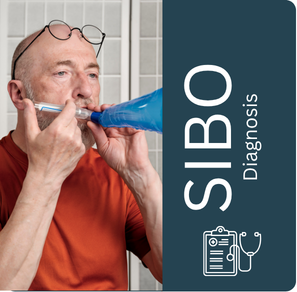
The hydrogen-methane breath test is usually performed in the morning after a fasting period. First, you provide an initial breath sample. This sample provides the baseline value. You then drink a precisely defined sugar solution containing glucose or lactulose.1,2
Further breath samples are then collected at fixed intervals. Depending on the testing protocol, the interval between individual samples is often 15 to 20 minutes. The test usually lasts two to three hours. It is important to collect and label every sample correctly at the scheduled time so that the gas profile can be reliably evaluated.2,3
Typical procedure step by step
- First breath sample before the test begins: it documents the baseline value.
- Drink the sugar solution containing glucose or lactulose.
- Provide further breath samples at the specified intervals.
- Laboratory analysis of hydrogen and methane; with suitable three-gas systems, hydrogen sulfide is also measured.
- Evaluation of the complete curve while taking symptoms and preparation into account.
During the test, you should not eat, smoke, chew gum or engage in physical exercise. Whether and how much still water is permitted depends on the instructions of the respective laboratory or medical practice.2,3
3. When is a SIBO breath test positive?
Whether a test result is classified as positive depends on the gases measured, the test substrate and the criteria used. Internationally common thresholds based on the North American Consensus and the ACG guideline refer to hydrogen and methane:1,4
- Hydrogen: An increase of at least 20 ppm above baseline within the first 90 minutes after ingestion of glucose or lactulose.
- Methane: A methane level of at least 10 ppm at any time during the test.
ppm stands for “parts per million.” The threshold alone does not replace a medical assessment. An abnormal test result may be influenced by the test substrate, an altered intestinal transit time, suboptimal preparation or problems with the breath sample. There is currently no internationally established consensus threshold for hydrogen sulfide that can be considered equivalent to the H₂/CH₄ criteria.2,3,5,6
| Measurement | Commonly used threshold | Interpretation |
|---|---|---|
| Hydrogen | Increase ≥ 20 ppm above baseline within 90 minutes | May indicate SIBO when consistent with the clinical picture.1,4 |
| Methane | ≥ 10 ppm at any time | Indicates a methane-positive finding and is often classified as IMO.1,4 |
| Hydrogen sulfide (H₂S) | No generally accepted guideline-based threshold | Newer studies show associations with H₂S-producing small intestinal bacteria and particularly diarrhea-associated symptoms; however, diagnostic standardization has not yet been completed.5,6,7 |
What does the test result mean for treatment?
A positive test result alone does not determine treatment. The ACG guideline recommends antibiotic treatment in symptomatic patients with SIBO as a conditional recommendation based on an overall low quality of evidence. Which treatment is appropriate in an individual case depends, among other things, on symptoms, risk factors, accompanying conditions, previous treatments and the diagnostic assessment. In particular, no independent standardized treatment should currently be derived from an elevated hydrogen sulfide value because there are not yet any established guideline-based thresholds or treatment criteria for it.4,5,6
4. Glucose, lactulose and fructose compared
The test substrate influences which section of the intestine can be assessed particularly well with the breath test. Glucose and lactulose are established substrates in SIBO breath testing. A fructose breath test, by contrast, is primarily used to investigate fructose malabsorption and is not a standard test for diagnosing SIBO.1,2,4
| Test substrate | Absorption in the intestine | What is measured? | Advantage / special feature |
|---|---|---|---|
| Glucose | Rapidly absorbed in the upper small intestine. | Hydrogen and methane. | May provide indications of fermentation in the proximal small intestine. Changes in more distal sections of the small intestine may, under some circumstances, be detected less effectively.1,2 |
| Lactulose | It is not absorbed by humans and continues toward the large intestine. | Hydrogen and methane. | Allows assessment of the temporal gas profile over a larger section of the intestine. Interpretation is challenging because a rapid orocecal transit time can also contribute to an early increase.2,3 |
| Fructose | Absorption in the small intestine varies between individuals and is limited. | Primarily hydrogen, ideally methane as well. | Primarily used to investigate fructose malabsorption. An abnormal fructose breath test does not prove SIBO.2 |
Why the 90-minute point should not be considered in isolation
The 90-minute period is commonly used to assess an early rise in hydrogen. However, it is not a fixed individual point at which lactulose reaches the large intestine in every person. Orocecal transit time can vary and represents an important source of error. Test curves should therefore not be interpreted purely schematically, but together with the clinical situation. Professional societies and experts differ to some extent in their assessment of the diagnostic value of lactulose breath testing, particularly in patients with nonspecific functional symptoms, which further underscores the importance of careful clinical interpretation.2,3,8
5. Checklist: preparing for the breath test
Good preparation improves the informative value of a breath test and therefore the reliability of the test results. The specific instructions provided by the laboratory or treating medical practice always take precedence because protocols may differ depending on the testing system and medical situation.2,3
Preparation checklist
- ☐ Antibiotics: As a rule, they should not be taken for at least 4 weeks before the test, provided this is medically appropriate and has been discussed with the treating practice.2
- ☐ Diet on the previous day: Avoid poorly absorbed, highly fermentable carbohydrates and high-fiber foods according to the laboratory’s instructions.2,3
- ☐ Prebiotics and probiotics: Take or pause them only according to the instructions of the medical practice; recommendations may differ between laboratories.3
- ☐ Prokinetics and laxatives: Pause them only after consultation. Depending on the guideline or laboratory, at least 24 hours to approximately one week is often recommended.2,3
- ☐ Fasting: Usually remain fasting for at least 8 hours before the test; some protocols recommend 8 to 12 hours.2,3
- ☐ On the day of the test: Do not smoke, exercise, chew gum or eat. Permitted beverages depend on the laboratory’s instructions.2,3
- ☐ Document medications: Discuss all medications and dietary supplements with the medical practice in advance.
6. Sources of error and limitations of interpretation
Breath tests are practical, non-invasive and widely used. Nevertheless, they have limitations. A positive result cannot be evaluated independently of preparation, testing method and the clinical situation.2,3
Possible reasons for results that are difficult to interpret
- Incomplete preparation: Antibiotics, deviations from the prescribed diet, smoking, exercise or certain medications can alter the result profile.2,3
- Rapid or slow transit time: Particularly with the lactulose breath test, the point at which the test substrate reaches the large intestine can influence interpretation.2,3
- Unsuitable breath sample: An incorrectly collected end-expiratory sample may contain diluted exhaled air and distort the measurement.2
- Single-gas measurement: If only hydrogen is measured, a methane-positive finding may be missed. It is therefore useful to measure hydrogen and methane simultaneously.2,4
- Hydrogen sulfide measurement: H₂S can provide additional information but is not included in all testing systems. The current lack of standardization and generally accepted thresholds limits the diagnostic significance of an isolated H₂S value.5,6
- Nonspecific symptoms: Bloating, abdominal pain, diarrhea, constipation or a feeling of fullness can have many causes – including irritable bowel syndrome, food intolerances, celiac disease, motility disorders or other gastrointestinal conditions.
For these reasons, it is useful not to focus solely on “positive” or “negative.” A thorough discussion of findings takes into account the curve profile, symptoms, risk factors and accompanying conditions as well as possible alternative explanations.3,4
7. FAQ about a positive breath test
Does a positive SIBO breath test definitely mean that I have SIBO?
No. A positive test result may indicate increased microbial fermentation in the small intestine. However, it should always be evaluated together with symptoms, pre-existing conditions, test substrate, medications, preparation and possible sources of error.2,3,5
What is the difference between hydrogen, methane and hydrogen sulfide?
Hydrogen, methane and hydrogen sulfide are different microbial breath gases or metabolic products. An early rise in hydrogen can occur during carbohydrate fermentation. Methane is produced by methanogens; a level of at least 10 ppm at any time is considered methane-positive according to commonly used consensus criteria and is often classified within the context of IMO. Hydrogen sulfide (H₂S) is associated with H₂S-producing bacteria; newer data show associations with diarrhea, urgency and abdominal pain, among other symptoms. However, standardized and generally accepted diagnostic thresholds for H₂S are still lacking.1,4,5,6,7
What happens if I made a mistake during preparation?
The result may then be less reliable or more difficult to interpret. Inform your treating medical practice openly about antibiotics, diet, probiotics, laxatives, prokinetics, smoking or other deviations. Depending on the situation, repeating the test under standardized conditions may be appropriate.2,3
Can treatment be determined directly from a positive test result?
No. In symptomatic patients, a positive finding can support a treatment decision, but treatment should not be based solely on a breath test. The ACG guideline recommends antibiotic treatment for symptomatic SIBO but rates the supporting evidence as low. There are currently no generally accepted guideline-based treatment thresholds for hydrogen sulfide.4,5,6
Can a bloated abdomen really cause back pain?
Severe abdominal bloating can cause pressure, muscle tension and radiating discomfort. However, back pain has many possible causes and should not automatically be attributed to the gut. In case of severe, newly occurring or persistent pain, or warning signs such as fever, weight loss, blood in the stool, numbness or paralysis, medical evaluation is important.
8. Glossary: important terms relating to the SIBO breath test
- Breath test
- A non-invasive testing procedure in which gases in exhaled air are measured after administration of a defined test substrate. Hydrogen and methane are the most established gases in SIBO diagnostics; some systems additionally measure hydrogen sulfide.1,2,5
- Breath sample
- A sample of exhaled air collected at a specified time and analyzed at least for hydrogen and methane; suitable three-gas systems can additionally measure hydrogen sulfide.
- Baseline value
- The first measurement taken before drinking the sugar solution. It serves as the reference point for assessing later values.
- Glucose
- A test substrate that is rapidly absorbed in the upper small intestine. It is frequently used in SIBO breath testing.1,2
- IMO
- Intestinal methanogen overgrowth. Term used for a methane-positive breath test finding; methanogens are not bacteria but archaea.4
- Lactulose
- A non-absorbable sugar that passes through the small intestine and reaches the large intestine. This makes the progression of the curve particularly important during interpretation.1,2
- Methane (CH₄)
- A breath gas produced by methanogens. A level of 10 ppm or higher at any time is considered methane-positive according to commonly used criteria.1,4
- ppm
- “Parts per million.” The unit describes the concentration of gases in exhaled air.
- Threshold
- A defined cut-off value above which a gas profile is classified as abnormal. The threshold does not replace individual medical assessment.
- Hydrogen sulfide (H₂S)
- A microbially produced gas that can be measured in newer three-gas breath tests. Studies show associations with H₂S-producing small intestinal bacteria and diarrhea-associated symptoms; standardized diagnostic thresholds are currently lacking.5,6,7
- Test result
- The overall interpretation of the measured gas curve. Test results should be interpreted together with symptoms, preparation, test substrate, medications and possible sources of error.
- Treatment
- Treatment is not based solely on the breath test. For symptomatic SIBO, the ACG guideline lists antibiotics as a possible treatment, although this is based on a conditional recommendation with a low quality of evidence.4
- Hydrogen (H₂)
- A gas that can be produced during microbial fermentation of carbohydrates and measured in exhaled air.1,2
SIBO Academy® Newsletter
Get the latest updates from the world of SIBO delivered straight to your inbox for free.
9. Sources
- Rezaie, A., Buresi, M., Lembo, A., Lin, H., McCallum, R., Rao, S., & others. (2017). Hydrogen and Methane-Based Breath Testing in Gastrointestinal Disorders: The North American Consensus. American Journal of Gastroenterology, 112(5), 775–784. PubMed
- Hammer, H. F., Fox, M. R., Keller, J., Salvatore, S., Basilisco, G., Hammer, J., & others. (2022). European guideline on indications, performance, and clinical impact of hydrogen and methane breath tests in adult and pediatric patients. United European Gastroenterology Journal, 10(1), 15–40. Full text at PMC
- Saad, R. J., & Chey, W. D. (2014). Breath testing for small intestinal bacterial overgrowth: maximizing test accuracy. Clinical Gastroenterology and Hepatology, 12(12), 1964–1972. PubMed
- Pimentel, M., Saad, R. J., Long, M. D., Rao, S. S. C., & others. (2020). ACG Clinical Guideline: Small Intestinal Bacterial Overgrowth. American Journal of Gastroenterology, 115(2), 165–178. Guideline
- Tansel, A., & Levinthal, D. J. (2023). Understanding Our Tests: Hydrogen-Methane Breath Testing to Diagnose Small Intestinal Bacterial Overgrowth. Clinical and Translational Gastroenterology, 14(4), e00567. PubMed
- Villanueva-Millan, M. J., Leite, G., Mathur, R., Rezaie, A., & others. (2025). Hydrogen Sulfide and Methane on Breath Test Correlate with Human Small Intestinal Hydrogen Sulfide Producers and Methanogens. Digestive Diseases and Sciences, 70, 3846–3856. PubMed
- Pimentel, M., Leite, G., Joo, L., Rezaie, A., Mathur, R., Brenner, D., Nguyen, L., & others. (2026). Real-world Study of Three-gas Breath Testing Nationwide and the Association With Symptoms. Journal of Clinical Gastroenterology, 60(5), 406–417. PubMed
- Kashyap, P., Moayyedi, P., Quigley, E. M. M., Simrén, M., & Vanner, S. (2024). Critical appraisal of the SIBO hypothesis and breath testing: A clinical practice update endorsed by the European Society of Neurogastroenterology and Motility and the American Neurogastroenterology and Motility Society. Neurogastroenterology & Motility, 36(6), e14817. Full text