

👆 Key Takeaways
-
SIBO (“Small Intestinal Bacterial Overgrowth”) is a bacterial colonization disorder of the small intestine. It can cause symptoms such as bloating, abdominal pain, diarrhea, or constipation.
- Depending on the type of microbes that have settled in the small intestine, we distinguish between hydrogen-SIBO, methane-SIBO (IMO), and hydrogen sulfide-SIBO (ISO). Predominant symptoms differ by SIBO type. In addition, IMO is caused by archaea, which can overgrow both the small and large intestine.
-
With a dysbiosis dominated by methane-producing archaea (ancient microorganisms), those affected mainly suffer from constipation because methane slows intestinal motility. IMO is caused by methanogenic archaea (e.g., M. smithii) that convert hydrogen into methane.
Methane-Producing Gut Bacteria as a Trigger for SIBO? What You Can Do
Contents
1. What is SIBO?
1.1 SIBO Diagnostics
1.2 SIBO Treatment
2. Forms of SIBO – Hydrogen-SIBO, Intestinal Methanogen Overgrowth (IMO), Hydrogen Sulfide-SIBO (ISO)
2.1 Hydrogen-SIBO
2.2 Methane-SIBO – IMO (Intestinal Methanogen Overgrowth)
2.3 Hydrogen Sulfide-SIBO
3. Effects of Methane on the Gut
4. What to Do for IMO
5. FAQs
1. What is SIBO?
SIBO is the abbreviation for the English term  “Small Intestinal Bacterial Overgrowth”, in German “Dünndarmfehlbesiedlung.” It describes the pathological overgrowth of bacteria in the small intestine. In a healthy state, the small intestine, unlike the colon, is only sparsely colonized by bacteria. Due to increased bacterial growth in the wrong place, the small intestine becomes overwhelmed. It cannot cope with the amount of gases and toxins produced by the bacteria. The result is symptoms such as abdominal pain, bloating and gas, diarrhea, constipation, belching, a feeling of fullness, and heartburn.

1.1 SIBO Diagnostics
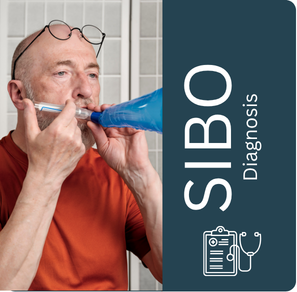
Diagnosis of SIBO is typically made using a breath test. Different substrates can be used, each with advantages and disadvantages. Commonly used substrates are lactulose, glucose, or in certain cases fructose (1). These are drunk as a solution during the test. The variety of substrates reflects the fact that not all bacteria ferment every sugar.
The breath test takes advantage of the fact that human cells do not produce hydrogen or methane. An increase in these breath gases after carbohydrate ingestion must therefore come from bacteria fermenting the sugar. The gas produced is absorbed into the bloodstream and exhaled via the lungs.
1.2 SIBO Treatment
If a SIBO test is positive, there are several treatment options. These include a specially designed SIBO diet—that is, nutritional adjustments—herbal or conventional antibiotics (2), and in some cases specific probiotics. The choice of treatment depends on the type and course of symptoms as well as on the predominant microbes.
2. Forms of SIBO – Hydrogen-SIBO, Intestinal Methanogen Overgrowth (IMO), and Hydrogen Sulfide-SIBO (ISO)
There are three main forms of SIBO. They are classified according to the predominant gases produced: hydrogen (H2), methane (CH4), and hydrogen sulfide (H2S).
2.1 Hydrogen-SIBO
In hydrogen-SIBO, those affected usually suffer from diarrhea, bloating, and gas. Hydrogen is produced as a by-product of various metabolic processes by numerous bacteria. The most commonly identified bacteria here include E. coli and Klebsiella, which can disrupt digestion.
2.2 Methane-SIBO (Intestinal Methanogen Overgrowth, IMO)
People with methane-dominant SIBO mostly suffer from constipation. Methane is produced primarily by archaea. Strictly speaking, the term SIBO is not entirely correct here because archaea are not bacteria. Methane-dominant SIBO is therefore also called IMO (intestinal methanogen overgrowth) (3). In addition to not being classic bacteria, archaea can overgrow both the small and large intestine. This is an important aspect to consider when interpreting a breath test.
Archaea and bacteria are both prokaryotes, meaning they lack a cell nucleus, unlike eukaryotes. Nevertheless, archaea and bacteria differ in cell structure and metabolism, and therapy therefore differs as well.
The main organisms implicated in methane-dominant SIBO include Methanobrevibacter smithii (4), Methanomassiliicoccus, and Methanosphaera stadtmanae.
2.3 Hydrogen Sulfide-SIBO
In hydrogen sulfide-SIBO, as the name suggests, hydrogen sulfide-producing bacteria predominate. The main organisms in the small intestine include Proteus mirabilis and Desulfosarcina, and in the large intestine Desulfovibrio and Fusobacterium. Hydrogen sulfide is the chemical name for the gas H2S. Symptoms in this form of SIBO can include diarrhea (5), urgency, constipation (6), joint pain, and brain fog. There can also be gas with a characteristic “rotten egg” smell. It is important to note that producers of hydrogen sulfide and methane often compete for available hydrogen; the dominance of one group can reduce the gas output of the other.
3. Effects of Methane on the Gut
As mentioned, people with IMO often suffer from constipation. This is because methane produced by methanogenic microorganisms can slow intestinal transit (7). Archaea form methane by using hydrogen produced by other bacteria; this process is called commensalism. Overall, the amount of methane detectable in the breath correlates with the severity of constipation (8).
A slower gut with reduced motility is less able to control microbial settlement through its cleansing waves, which can lead to an increase in, for example, archaea—a vicious cycle. In addition, methane acts as a neuroregulatory molecule on the enteric nervous system, which also reduces contractions of the small intestine—specifically the function of the MMC (Migrating Motor Complex). As noted above, methanogenic microorganisms can metabolize bacterial hydrogen into methane. Because hydrogen is more voluminous than methane, gas patterns and symptoms can change. For a long time it was assumed that methane-SIBO/IMO always co-occurred with hydrogen-SIBO. Newer research shows, however, that the presence of hydrogen-producing commensals is sufficient and that IMO can therefore occur independently of hydrogen-SIBO.
4. What to Do for IMO (Intestinal Methanogen Overgrowth)?
Archaea are not easy to eliminate. It is therefore advisable to carry out IMO therapy under medical supervision. Treatments for IMO—similar to SIBO—include special diets (e.g., a low-FODMAP approach), antibiotics, as well as specific pro- and prebiotics.
5. FAQs
Which SIBO types exist?
Depending on which microbes have colonized the small intestine, we distinguish between hydrogen-SIBO, methane-SIBO (IMO), and hydrogen sulfide-SIBO (ISO).
Which symptoms predominate in IMO / methane-SIBO?
In IMO, too many methane-producing archaea have settled in the gut. They produce methane and primarily cause constipation.
How can IMO be treated?
The causes of SIBO are often multifactorial. In addition to antibiotic therapy, attention should always be paid to diet, stress, and physical activity.
References
- Rezaie A, Buresi M, Lembo A, Lin H, McCallum R, Rao S, Schmulson M, Valdovinos M, Zakko S, Pimentel M. Hydrogen and Methane-Based Breath Testing in Gastrointestinal Disorders: The North American Consensus. Am J Gastroenterol. 2017 May;112(5):775-784. doi: 10.1038/ajg.2017.46. Epub 2017 Mar 21. PMID: 28323273; PMCID: PMC5418558.
- Ginnebaugh B, Chey WD, Saad R. Small Intestinal Bacterial Overgrowth: How to Diagnose and Treat (and Then Treat Again). Gastroenterol Clin North Am. 2020 Sep;49(3):571-587. doi: 10.1016/j.gtc.2020.04.010. Epub 2020 Jun 14. PMID: 32718571.
- Takakura W, Pimentel M. Small Intestinal Bacterial Overgrowth and Irritable Bowel Syndrome – An Update. Front Psychiatry. 2020 Jul 10;11:664. doi: 10.3389/fpsyt.2020.00664. PMID: 32754068; PMCID: PMC7366247.
- Takakura W, Pimentel M. Small Intestinal Bacterial Overgrowth and Irritable Bowel Syndrome – An Update. Front Psychiatry. 2020 Jul 10;11:664. doi: 10.3389/fpsyt.2020.00664. PMID: 32754068; PMCID: PMC7366247.
- Pimentel M, Hosseini A, Chang C, Mathur R, Rashid M, Sedighi R, et al. Fr248 EXHALED HYDROGEN SULFIDE IS INCREASED IN PATIENTS WITH DIARRHEA: RESULTS OF A NOVEL COLLECTION AND BREATH TESTING DEVICE. Gastroenterology. 2021 May;160(6):S-278. DOI: 10.1016/S0016-5085(21)01391-3.
- Guo HZ, Dong WX, Zhang X, Zhu SW, Liu ZJ, Duan LP. [The diagnostic value of hydrogen sulfide breath test for small intestinal bacterial overgrowth]. Zhonghua Nei Ke Za Zhi. 2021 Apr 1;60(4):356-361. Chinese. doi: 10.3760/cma.j.cn112138-20200731-00725. PMID: 33765706.
- Pimentel M, Lin HC, Enayati P, van den Burg B, Lee HR, Chen JH, Park S, Kong Y, Conklin J. Methane, a gas produced by enteric bacteria, slows intestinal transit and augments small intestinal contractile activity. Am J Physiol Gastrointest Liver Physiol. 2006 Jun;290(6):G1089-95. doi: 10.1152/ajpgi.00574.2004. Epub 2005 Nov 17. PMID: 16293652.
- Chatterjee S, Park S, Low K, Kong Y, Pimentel M. The degree of breath methane production in IBS correlates with the severity of constipation. Am J Gastroenterol. 2007 Apr;102(4):837-41. doi: 10.1111/j.1572-0241.2007.01072.x. PMID: 17397408.