SIBO Diet: How does a SIBO Diet Plan look like?
Content
1. What is SIBO?
2. The Role of Diet in SIBO
2.1 Basic Principles of a SIBO Diet
3. What SIBO Diets Are There?
3.1 Low FODMAP Diet
3.2 Specific Carbohydrate Diet (SCD)
3.3 SIBO-Specific Food Guideline (SSFG)
3.4 Bi-Phasic Diet
3.5 Low Fermentation Diet
4. Practical Nutrition Tips
4.1 Meal Spacing
4.2 Stress management
4.3 Reintroduction of Food Items
5. Summary: Nutrition for SIBO
6. SIBO Nutrition PDF
1. What is SIBO
Small intestinal bacterial overgrowth is a bacterial overgrowth in the small intestine, a section of our digestive tract that usually contains few bacteria. When bacteria manage to settle there, they have ideal growth conditions because the small intestine still contains all the nutrients from our food, which the gut bacteria use as nourishment. Additionally, there are few other bacteria in the small intestine as competition—perfect for SIBO pathogens. The SIBO symptoms are almost identical to those of irritable bowel syndrome, making SIBO one of the most important differential diagnoses in suspected IBS.
2. The Role of Diet in SIBO
Bacteria must produce energy to survive, and they do this by fermenting fibers and carbohydrates from our food. These components in our food are called FODMAPs (Fermentable Oligo-, Di-, Monosaccharides, and Polyols) and can be found in a variety of foods. This is where dietary changes come into play, alongside the use of antibiotics and plant-based substances for treatment.
Foods like onions, garlic, leeks, mushrooms, cruciferous vegetables, grains, dairy products, fruits, and sweeteners like xylitol are involved. By reducing this group of foods in our diet, the bacteria have less food and, due to the absence of fermentation, produce less gas.
2.1 Basic Principles of a SIBO Diet
The different dietary approaches for treating small intestinal bacterial overgrowth specifically target FODMAPs. Depending on the diet, fiber-rich foods are more or less strictly avoided (low-fodmap) for a limited period. This helps quickly reduce gas and toxin production, alleviating symptoms and allowing the intestine to rest. However, the diet itself cannot treat the bacterial overgrowth; it is solely intended to reduce symptoms.
3. What SIBO Diets Are There?
Suitable dietary therapies for SIBO include the low-FODMAP diet, the Specific Carbohydrate Diet (SCD), the SIBO-Specific Food Guide (SSFG), the Bi-Phasic Diet, as well as other individually tailored approaches. Bi-phasic diet (BPD) and the low-fermentation diet.
3.1 Low FODMAP Diet
The low-FODMAP diet focuses on reducing fermentable oligosaccharides, disaccharides, monosaccharides, and polyols in food.
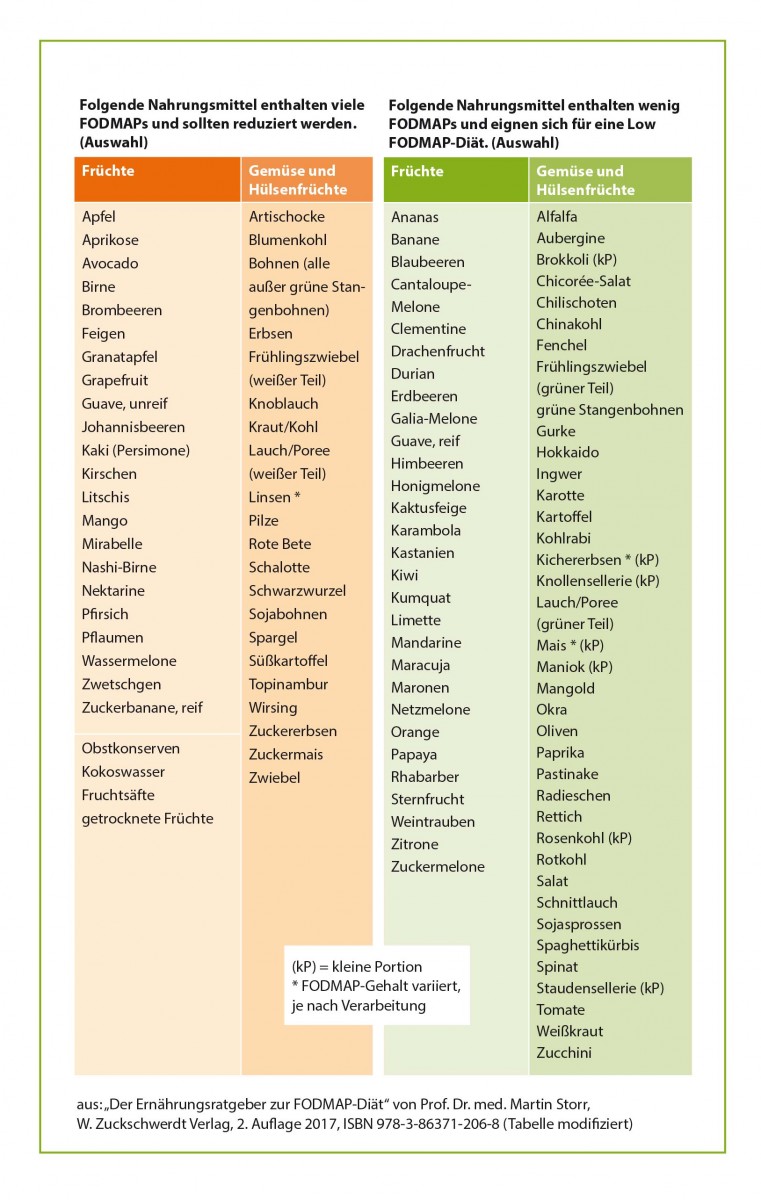
In addition to the previously mentioned foods, FODMAPs are also found in high-fructose fruits such as pears, apples, and cherries. Fruits like raspberries, melon, and papaya are lower in FODMAPs and therefore generally better tolerated.
When it comes to vegetables, onions, artichokes, cauliflower, beans, and other gas-producing varieties are high in FODMAPs. Legumes, cabbage, and mushrooms in particular can trigger symptoms. On the other hand, low-FODMAP and usually well-tolerated vegetables include potatoes, pumpkin, and spinach. (1)
3.2 Specific Carbohydrate Diet (SCD)
The Specific Carbohydrate Diet (SCD) was developed by the American physician Dr. Haas. This diet focuses on reducing grains and carbohydrates. During the diet, the consumption of starches, sugars (e.g., fructose and lactose), and any kind of grains is prohibited. Allowed foods include fresh vegetables, fresh meat, eggs, tea, honey, and fresh fruits low in fructose. (2)
3.3 SIBO-Specific Food Guideline (SSFG)
The SIBO-Specific Food Guide (SSFG) by Dr. Allison Siebecker combines the low-FODMAP and SCD diets, making it even more restrictive than either diet alone. Dr. Siebecker categorizes foods into four groups based on their fermentability. Groups 1 to 3 are generally allowed, but the quantity of foods in Groups 2 and 3 is reduced. Group 4 consists of highly fermentable foods that are completely excluded. Examples of permitted foods include carrots, cucumbers, tomatoes, grapes, pineapple, almonds, butter, eggs, and tea. (3,4)
3.4 Bi-phasic Diet
The Bi-Phasic Diet according to Dr. Nirala Jacobi, as the name suggests, consists of two phases. In the first two to four weeks, there is a very strict avoidance of all fermentable carbohydrates. In the second phase, the restrictions are eased, allowing the “good” bacteria to have a small food source again. At the same time, therapeutic supplements are often introduced. (5)
3.5 Low Fermentation Diet
In Dr. Mark Pimentel’s “Low Fermentation” diet (also known as The Cedars Sinai Diet), a relatively wide variety of foods are allowed. One key focus is on the timing of food intake. A pause of 4 hours between meals (meal spacing) is recommended, along with the advice to avoid eating right before bedtime. Allowed foods include simple carbohydrates (such as those found in rice, potatoes, white bread, and pasta), proteins, and fats. Fermentable carbohydrates, fiber, fructose, and lactose should be avoided. (6,7,8)
4. Practical Nutrition Tips
4.1 Meal Spacing
Meal Spacing – i.e. intentional breaks of around 4 to 5 hours between main meals – plays a central role in the therapeutic dietary approach to SIBO.
This practice is based on targeted support of the so-called Migrating Motor Complex (MMC), a physiological cleansing mechanism in the small intestine.
The MMC is primarily activated in a fasting state and uses wave-like contractions to transport food residues and excess microorganisms from the small intestine into the large intestine. When food intake is continuous – such as through frequent snacking or very short intervals between meals – this mechanism is inhibited or even completely suppressed.
Especially in the case of SIBO, where bacterial overgrowth occurs in the small intestine, proper MMC function is essential to prevent re-colonization. Meal spacing therefore plays a key role in maintaining bacterial balance in the small intestine and enhancing the effectiveness of further therapeutic interventions.
4.2 Stress management
Chronic stress has been shown to negatively affect gastrointestinal motility and can significantly reduce the activity of the Migrating Motor Complex (MMC).
Since impaired small intestinal motility is a key pathophysiological factor in SIBO, effective stress management plays a crucial role in the overall therapeutic approach.
Stress activates the sympathetic nervous system (the “fight-or-flight” mode) while simultaneously inhibiting parasympathetically regulated digestive processes – including the peristaltic cleansing waves in the small intestine. This can promote bacterial overgrowth and exacerbate typical SIBO symptoms such as bloating, pain, or altered bowel habits.
Targeted stress-regulation strategies – including breathing techniques, meditation, yoga, mindful movement, or structured daily routines – support vagal activity and the function of the enteric nervous system. They help stabilize intestinal motility and lower the sensitivity threshold for visceral discomfort.
4.3 Reintroduction of Food Items
After a low-FODMAP phase, foods should be reintroduced slowly and one at a time – this helps identify individual triggers more accurately and avoid them in the long term.
The low-FODMAP diet is designed as a short-term elimination protocol, not as a permanent way of eating.
Following the reduction phase, the structured reintroduction of fermentable carbohydrates is essential in order to identify individual tolerances and gradually expand the diet again.
Reintroduction is carried out step by step and monospecifically – meaning that FODMAP groups (e.g., fructans, lactose, sorbitol, etc.) are tested one at a time and in controlled amounts, ideally under professional guidance. This allows for precise identification of which substances trigger symptoms and which are well tolerated.
This phase is crucial to avoid unnecessary restrictions, prevent long-term harm to the gut microbiome, and ensure a needs-based, diverse diet. The goal is not to completely eliminate FODMAPs, but to tailor intake to individual tolerance levels.
5. Summary: Nutrition for SIBO
In SIBO (small intestinal bacterial overgrowth), the bacteria in the small intestine feed on fermentable carbohydrates known as FODMAPs. To alleviate symptoms such as bloating, diarrhea, constipation, digestive discomfort, back pain, and abdominal pain, a low-FODMAP diet is advisable because it deprives the bacteria of their food source. After a certain period, FODMAPs should be gradually reintroduced according to individual tolerance. Such dietary changes should ideally be carried out under medical or nutritional supervision.
Each of the diets listed above should be followed with caution. Additionally, these diets are not intended as long-term eating plans and do not constitute a treatment for SIBO itself; rather, they primarily serve to reduce symptoms and support gut healing. Once symptoms improve, it is recommended to return to a normal, balanced, and healthy diet.
6. SIBO Nutrition PDF
In the following PDF, you will find foods that are generally well tolerated or less well tolerated in cases of SIBO: Nutrition for SIBO (Small Intestinal Bacterial Overgrowth)
References
- FODMAP-Tabelle-Blog.jpg (761×1200) (fodmap-info.de); zuletzt geprüft 07.05.2023; modifizierte Tabelle aus „Der Ernährungsratgeber zur FODMAP-Diät“ von Prof. Dr. med. Martin Storr
- Was ist SCD? | scd-blog.de ; latest check 07.05.2023
- PowerPoint Presentation (siboinfo.com); latest check 07.05.2023
- Diet – SIBO – Small Intestinal Bacterial Overgrowth (siboinfo.com); latest check 07.05.2023
- Small Intestinal Bacterial Overgrowth – Home – The SIBO Doctor; latest check 07.05.2023
- pdf (siboinfo.com); latest check 17.10.2023
- Irritable Bowel Syndrome: Mark Pimentel, MD (cedars-sinai.org); latest check 21.10.2023
- Mark Pimentel und Dr. Ali Rezaie (2024); “The Microbiome Connection: Your Guide to IBS, SIBO, and Low-Fermentation Eating”