
👆 The most important points at a glance
- SIBO means too many bacteria in the small intestine. Typical symptoms include bloating, abdominal pain, and bowel problems such as diarrhea, constipation, or alternating between the two.
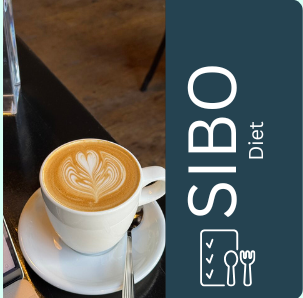
- Black coffee is generally low in FODMAPs, but it can still trigger symptoms in sensitive guts — for example through motility, acid, or caffeine.
- Milk, oat drink, syrup, and sugar alcohols are often more problematic than the coffee itself. What matters most is your individual tolerance.
✔ Verified quality:
Our articles are based on medical guidelines, studies, and publications. They are written by experts and not by AI. In addition, they go through reviews.
Coffee with SIBO: Enjoyment or Symptom Trigger?
1. What is SIBO?
2. Coffee with SIBO: Yes or No?
3. Caffeine, Gut Motility, and the MMC
4. The FODMAP Trap in Your Cup
5. Tips for SIBO-Friendly Coffee Enjoyment
6. Alternatives During the Elimination Phase
7. Summary
8. FAQs
9. Sources
1. What is SIBO?
In a healthy digestive system, most bacteria live in the large intestine. There, they perform important functions for digestion, vitamin production, and protection of the intestinal lining. With SIBO (Small Intestinal Bacterial Overgrowth), however, bacteria multiply excessively in the small intestine — in other words, in a place where significantly fewer microorganisms would normally be found.
As a result, carbohydrates and other nutrients are fermented earlier and more intensely by bacteria. This can lead to typical symptoms.
Typical symptoms include:
 Bloating and a distended abdomen
- Abdominal pain, a feeling of pressure, or cramping
- Diarrhea, constipation, or alternating between the two
- Fullness, nausea, and early satiety
- in more severe cases, nutrient deficiencies
- Fatigue or weight loss
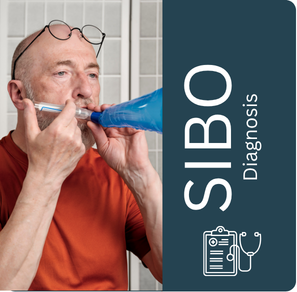
Common causes include impaired gut motility, anatomical changes, surgery, or reduced stomach acid production. SIBO is usually diagnosed with a  breath test, in which the gases hydrogen and methane are measured in the breath after drinking a sugar solution.
2. Coffee with SIBO: Yes or No?
The honest answer is: There is no one-size-fits-all yes-or-no rule. Individual tolerance always comes first with SIBO and IBS, and this is especially true for coffee. While one person can tolerate a small cup without any issues, another may experience bloating, abdominal pain, or diarrhea after just a few sips.
What you should pay attention to:
- Monitor your symptoms carefully: Do bloating, cramps, or diarrhea typically occur 30 to 120 minutes after coffee?
- Differentiate: Are you reacting to the coffee itself, the caffeine, or what you add to it — such as milk, oat drink, or syrup?
- During an elimination phase, it may make sense to cut out coffee completely for 1–2 weeks and then reintroduce it in a controlled way later.
What is important: Black coffee is not a classic high-FODMAP food. Problems often arise indirectly — for example through motility, acid, caffeine, or additives.
3. Caffeine, Gut Motility, and the MMC
A key concept in SIBO is the Migrating Motor Complex (MMC). This is a kind of “cleaning program” for the small intestine. During breaks between meals, the MMC helps move food residues and bacteria toward the large intestine. If this mechanism is impaired or slowed down, the risk of bacterial overgrowth in the small intestine increases.
Coffee — both caffeinated and decaffeinated — can stimulate gut motility. At first glance, that sounds positive because improved movement through the intestines could theoretically help push bacteria onward out of the small intestine.
The other side:
- Too much coffee, especially on an empty stomach, can overstimulate the intestines in sensitive people.
- Then, instead of an “orderly cleansing,” it may lead to cramp-like intestinal contractions, urgency, or diarrhea.
- Anyone who constantly drinks small sips of coffee throughout the day often leaves the MMC too few real breaks between meals, especially if the coffee is consumed with milk / milk alternatives / sugar / syrup, etc.
Practical approach:
- Do not use coffee as a permanent “solution” for constipation.
- Test whether you tolerate a small cup after a meal better than on an empty stomach.
- Avoid constantly “sipping” throughout the day if you want to support your gut motility.
4. The FODMAP Trap in Your Cup
Pure black coffee is generally low in FODMAPs. Symptoms often only arise from what is added to the cup.
4.1 Milk, Plant-Based Drinks, and Lactose
Milk and alternatives at a glance:
- Regular cow’s milk: contains lactose and can worsen symptoms in SIBO, IBS, or lactose intolerance.
- Lactose-free milk: is often better tolerated because the lactose has already been broken down. It is often the safest choice if milk protein is not a problem.
- Oat drink: is often rich in fructans and can be problematic for sensitive guts. Critical in SIBO.
- Soy drink made from whole beans: can be high in FODMAPs; varieties made from soy protein are often better tolerated.
- Almond or rice milk: are often more suitable because they are low FODMAP — but always check the ingredient list.
- Coconut milk: okay in small amounts (up to 60 ml), but above that can become problematic (sorbitol).
For many people affected, a small amount of lactose-free milk or a very simple, low-FODMAP plant-based drink is better tolerated than regular milk or large amounts of oat drink.
Download here our guide about milk alternatives:
Milk alternatives guide4.2 Sweeteners and Sugar Alcohols
Many people with SIBO turn to sugar-free syrups in their coffee. These sugar alcohols (polyols) are “food” for the bacteria in the small intestine. They belong to the FODMAPs and are often poorly absorbed in the small intestine. They draw water into the intestines and can lead to bloating, pain, and diarrhea. If you sweeten your coffee, it is generally better to use a small amount of real sugar or stevia/glucose instead of “sugar-free” alternatives.
Sugar alcohols include, among others:
- Sorbitol
- Xylitol
- Mannitol
- Maltitol
- Lactitol
- Isomalt
Erythritol is considered somewhat better tolerated, but it can still cause symptoms in larger amounts.
Tip:
- Read the ingredient list of syrups, coffee creamers, protein powders, and instant mixes.
- During the elimination phase, avoid products with endings such as -itol or -ol whenever possible.
- If you want to sweeten your coffee, test small amounts and observe your symptoms carefully.
Extended Glossary: Important Technical Terms
Glossary: Understanding Coffee & SIBO
- SIBO
- Abbreviation for “Small Intestinal Bacterial Overgrowth” — a condition in which too many bacteria are present in the small intestine, triggering fermentation processes there.
- MMC
- Migrating Motor Complex. A movement pattern of the intestines during breaks between meals that helps transport food residues and bacteria onward out of the small intestine.
- Gut motility
- Describes the movements of the intestines that transport food, fluids, and gases onward. Impaired motility is considered an important factor in SIBO.
- FODMAPs
- Abbreviation for “Fermentable Oligo-, Di-, Monosaccharides And Polyols”. These are fermentable carbohydrates that can trigger symptoms in sensitive intestines.
- Polyols
- Also called sugar alcohols. These include sorbitol, xylitol, and mannitol, for example. They are often used in “sugar-free” products and can worsen bloating or diarrhea.
- Cold Brew
- Coffee that is cold extracted. As a result, it often contains fewer acids and bitter compounds than traditionally brewed coffee and may be better tolerated by some people.
5. Tips for SIBO-Friendly Coffee Enjoyment
If you do not want to give up coffee completely, a few adjustments can often make a big difference.
5.1 Choose Low-Acid Beans
Low-acid or gently roasted beans are often better tolerated by sensitive people than very light, acid-forward roasts.
5.2 Try Cold Brew
Cold brew often contains fewer acids and bitter compounds. For some people affected, this feels gentler on the stomach and intestines.
5.3 Why Black Coffee Is Often the Best Tolerated
Black coffee avoids typical triggers such as lactose, fructans, syrups, and sugar alcohols. Many people with IBS or SIBO therefore tolerate a small cup of black coffee better than a large latte with additives.
| Strategy | Why is it helpful? | Relevance for SIBO |
|---|---|---|
| Small amount | Less irritation for the stomach and intestines | Often better tolerated than large mugs, especially with sensitive motility. |
| Drink after eating | Less strain than on an empty stomach | Can reduce urgency, cramps, or nausea. |
| Black or with lactose-free milk | Fewer FODMAP triggers in the cup | Helps identify and exclude problematic additives more clearly. |
| Do not sip all day long | Meal breaks remain intact | Can give the MMC more room to work. |
Additional practical tips:
- Instead of two large mugs, choose one small cup.
- Try to place coffee into a “safe” time slot — not directly before long trips or important appointments.
- Always test new variants one at a time so you can identify what you truly tolerate.
6. Alternatives During the Elimination Phase
During an elimination phase, it may make sense to temporarily replace coffee. Here too, the same principle applies: not every alternative is automatically gut-friendly.
6.1 Chicory Coffee and Inulin
Chicory coffee is often promoted as a caffeine-free alternative. The problem: it often contains inulin, a prebiotic fiber from the fructan group. These belong to the FODMAPs and can worsen symptoms in SIBO or IBS.
Therefore:
- During the strict elimination phase, it is better to be cautious with chicory coffee.
- Later, a slow re-test in small amounts may make sense — but only if symptoms are stable.
6.2 Other Alternatives
- Herbal teas such as peppermint, chamomile, fennel, or caraway — provided they are individually tolerated
- Green or white tea — they contain caffeine, but often have a milder effect than coffee
- Grain coffee without chicory — only after checking the ingredients, as problematic additives may also be present here
Important for alternatives as well: Watch out for inulin, fructose, sugar alcohols, and other additives, and test new products step by step.
7. Summary
- SIBO is an overgrowth in the small intestine in which bacteria are located in the wrong place and can trigger symptoms such as bloating, abdominal pain, and bowel problems.
- Coffee is not fundamentally forbidden with SIBO. What matters are individual tolerance, amount, timing, and additives.
- Black coffee is usually low in FODMAPs — milk, oat drink, syrups, or sugar alcohols are often the bigger problem.
- If you are sensitive, you can test what works with small amounts, milder roasts, or cold brew.
- During an elimination phase, it may make sense to leave out coffee temporarily and reintroduce it in a targeted way later.
8. FAQs
Am I allowed to drink coffee at all if I have SIBO?
That depends greatly on your individual tolerance. Black coffee is not automatically problematic, but in sensitive intestines it can worsen symptoms such as bloating, abdominal pain, or diarrhea. A cautious test in a small amount is often more useful than a blanket avoidance.
Is coffee a high-FODMAP food in SIBO?
Pure black coffee is generally considered low in FODMAPs. The real problems usually only arise from additives such as regular milk, oat drink, syrups, or sugar alcohols.
Why do I get bloating or diarrhea after coffee?
Coffee can stimulate gut motility, affect stomach acid, and trigger urgency or cramps in sensitive people. Caffeine, the amount consumed, or additives in the coffee can also play a role.
What is better with SIBO: black coffee, latte, or cold brew?
Many people affected tolerate a small cup of black coffee better than milk coffee with additives. Cold brew can also be more pleasant for some, because it often contains fewer acids and bitter compounds. However, individual testing remains the deciding factor.
SIBO Academy® Newsletter
Get the latest updates from the world of SIBO delivered straight to your inbox for free
9. Sources
- Cleveland Clinic. SIBO: Small intestinal bacterial overgrowth.
- Mayo Clinic. Small intestinal bacterial overgrowth (SIBO) – Symptoms & causes.
- StatPearls. Small intestinal bacterial overgrowth.
- Monash University. High and low FODMAP foods.
- PMCID: PMC5093271. Gastrointestinal disturbances associated with the consumption of sugar alcohols.
- PMCID: PMC5499961. Effect of chicory-derived inulin on abdominal sensations and bowel motor function.
- PMCID: PMC9699609. Mechanistic study of coffee effects on gut microbiota and motility in rodents.
- FODMAP Everyday. IBS, the low FODMAP diet, coffee & coffee drinks.
- Gourmend Foods. Coffee low FODMAP guide 2026: Easy tips for safe, tasty sips.
- MSD Manuals Professional Edition. Small intestinal bacterial overgrowth (SIBO).