
👆 The key points at a glance
- SIBO means: too many bacteria in the small intestine. Typical symptoms include bloating, abdominal pain, and bowel changes.
- Diet (e.g., a low FODMAP diet) can calm symptoms, but is usually not a stand-alone replacement for therapy.
- Kefir can help or trigger symptoms depending on the phase: in the acute phase it’s often rather problematic (fermentation/lactose/histamine); after successful therapy it may be reintroduced slowly.
✔ Quality checked:
Our articles are based on medical guidelines, studies, and scientific articles. They are written by experts and not by an AI. They also go through reviews.
Kefir for SIBO: Superfood or symptom trigger?
1. What is SIBO?
2. Why diet is so important in SIBO
3. What is kefir, anyway?
4. Kefir and SIBO – do they go together?
5. In which phase of SIBO is kefir useful?
6. How can you test kefir in everyday life?
7. Summary
8. FAQs
9. Sources
1. What is SIBO? When bacteria settle in the wrong place…
In a healthy gut, most bacteria live in the large intestine (colon). There, they help with digestion, produce vitamins, and protect the intestinal lining. With
 SIBO (Small Intestinal Bacterial Overgrowth), in German often called “Dünndarmfehlbesiedlung”, there are too many bacteria in the small intestine—a place where normally only few microorganisms live.
Typical symptoms can include:
 Bloating and a distended belly (often shortly after meals)
- Abdominal pain, a feeling of pressure, or cramps
- Diarrhea, Constipation or alternating between the two
- Nausea, a feeling of fullness, getting full more quickly
- Fatigue, headaches, or deficiencies of certain vitamins (e.g., B12), because the bacteria “consume” nutrients
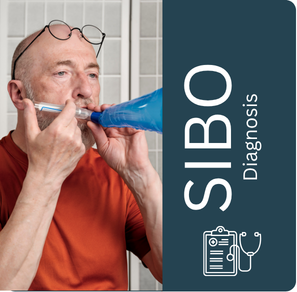
SIBO is most commonly diagnosed with a breath test,in which, after drinking a sugar solution (e.g.
Lactulose or Glucose), the gases hydrogen and methane are measured repeatedly in exhaled breath. If these values rise significantly, it suggests bacterial overgrowth in the small intestine.


2. Why diet is so important in SIBO
The bacteria in the small intestine love certain fermentable carbohydrates that are hard for us humans to digest. These so-called FODMAPs are fermented by bacteria. This produces gases that can trigger bloating, abdominal pain, and diarrhea.
That’s why diet plays a major role in treating SIBO:
- Many people benefit temporarily from a diet in which FODMAPs are intentionally reduced.
- The goal is not “to avoid things strictly forever,” but to calm symptoms and get the situation under better control.
- Important: This is often not a causal treatment, but a symptom strategy.
- Depending on the situation, antibiotics, herbal agents, prokinetics (to support gut motility), and probiotics are used in parallel — always coordinated with a therapist.
You can also find an overview of treatment options here: SIBO therapy.
In this context, one question often comes up: “Am I allowed to drink kefir if I have SIBO?”
3. What is kefir, anyway?
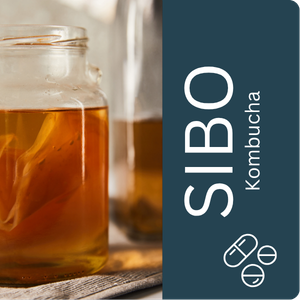
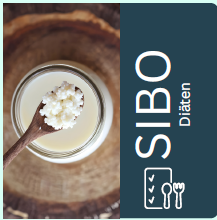
Kefir is a fermented milk drink. Milk is mixed with so-called kefir grains (a mixture of bacteria and yeasts) and left at room temperature for several hours to days. During this time, the microorganisms partially break down milk sugar (lactose) and produce lactic acid, some carbon dioxide, and traces of alcohol.
This creates a slightly sour, sparkling drink with many live microorganisms — often described as “good” probiotics. Kefir can:
- influence the gut microbiome (the totality of gut bacteria)
- support digestion
- improve bloating and constipation in some people
There are:
- Milk kefir (from cow’s, sheep’s, or goat’s milk)
- Water kefir (from sugar water, dried fruit, and kefir crystals, without milk)
4. Kefir and SIBO – do they go together?
This is where it gets interesting — and very individual.
4.1 What speaks in favor of kefir
- Kefir contains live microorganisms that can, in principle, help stabilize the gut microbiome (especially in the large intestine).
- Fermentation breaks down some of the lactose — some lactose-sensitive people tolerate kefir better than regular milk.
- After completing SIBO treatment, introducing kefir in small amounts and step by step may help strengthen the gut flora again.
4.2 What can speak against it
- With active small intestinal bacterial overgrowth, any additional “bacterial stimulus” or fermentable sugars can worsen symptoms: more bloating, pressure, diarrhea.
- Especially with high hydrogen or methane values and strong sensitivity to carbohydrates, some people react very sensitively to fermented foods.
- Kefir is not automatically low in FODMAPs. If it still contains lactose, it can cause symptoms.
- Some people react to histamine-rich foods: longer-fermented products (often including kefir) can trigger reactions such as headaches, flushing, itchy skin, or sleep problems.
Conclusion: Kefir can be helpful for some people with SIBO — for others it worsens symptoms.
Extended glossary: important terms
Glossary: understanding kefir & SIBO
- SIBO
- Abbreviation for “Small Intestinal Bacterial Overgrowth”. This means too many bacteria in the small intestine, which can lead to fermentation processes, gas production, and symptoms such as bloating, abdominal pain, or bowel problems.
- Breath test
- Diagnostic procedure in which, after drinking a sugar solution (e.g., lactulose or glucose), hydrogen (H₂) and/or methane (CH₄) are measured in exhaled breath over multiple time points. Marked increases can indicate overgrowth.
- FODMAPs
- Abbreviation for “Fermentable Oligo-, Di-, Monosaccharides And Polyols”. These are fermentable carbohydrates that can cause gas and symptoms — especially when bacteria in the small intestine “eat along.”
- Fermentation
- Biological process in which microorganisms (bacteria/yeasts) break down sugars, producing, among other things, lactic acid, carbon dioxide, and other metabolic products. Kefir is made through fermentation.
- Kefir grains (kefir cultures)
- Gel-like cultures consisting of a mixture of bacteria and yeasts. They are used to ferment milk (milk kefir) or sugar water (water kefir).
- Milk kefir
- Fermented drink made from milk (cow/sheep/goat) and kefir cultures. Depending on the fermentation duration, it can contain residual lactose, which can be relevant in SIBO and/or lactose intolerance.
- Water kefir
- Fermented drink made from water + sugar (often with dried fruit/lemon) and water kefir crystals. It is lactose-free, but—depending on fermentation time—can still contain residual sugar, which may trigger symptoms in SIBO.
5. In which phase of SIBO is kefir useful?
5.1 Acute phase: better to be cautious
If symptoms are pronounced (severe bloating, pain, diarrhea/constipation) and the SIBO diagnosis has just been made, the initial focus is on:
- treating the overgrowth (e.g., antibiotics or herbal preparations)
- adjusting the diet so symptoms calm down
- supporting gut motility
In this phase, it’s usually sensible to either leave out kefir or try only tiny test amounts at most.
5.2 During ongoing treatment: a gentle trial
If symptoms have already improved and you don’t react strongly to histamine or dairy products, a careful trial can make sense:
- First choose a lactose-free or very long-fermented milk kefir (the longer the fermentation, the less lactose remains).
- Start with 1–2 tablespoons with a well-tolerated meal (not on an empty stomach).
- Observe closely for 3–5 days: bloating, abdominal pain, bowel movements, skin, sleep, headaches.
- If symptoms increase markedly: stop and, if needed, test again only after the end of therapy.
5.3 After successful therapy: a building block for a stable microbiome
Once SIBO treatment is completed and both breath test and symptoms have improved significantly, the goal shifts: strengthen the microbiome, prevent relapses, stabilize digestion. In this phase, kefir can be a good addition—if tolerated. For example:
- slowly increase up to about 100–200 ml/day if you tolerate it well
- use kefir as part of an overall gut-friendly diet (high in fiber, minimally processed, moderate FODMAP amounts, sufficient protein and healthy fats)
- combine kefir with other fermented foods (e.g., plain yogurt, small amounts of sauerkraut) if you tolerate these as well
Milk kefir or water kefir – which is better for SIBO?
Both have pros and cons — in the end, individual tolerance is what matters.
| Feature | Milk kefir | Water kefir | Relevance for SIBO |
|---|---|---|---|
| Base | Cow’s, sheep’s, or goat’s milk | Water + sugar + dried fruit | Milk kefir can (depending on production) contain residual lactose/milk protein. |
| Microbial strains | Very diverse (lactobacilli, yeasts) | More moderate, often fewer strains | Water kefir is often perceived as “lighter” — still individual. |
| Histamine content | High (due to fermentation) | Medium to high | Relevant if SIBO is associated with histamine issues. |
| Lactose | Residual amounts possible | 100% lactose-free | Crucial in secondary lactose intolerance. |
6. How can you test kefir in everyday life?
A possible roadmap (not a substitute for medical advice, but for orientation):
- Clarify with your doctor whether kefir is basically an option for you — especially with severe symptoms, multiple intolerances, or other bowel diseases.
- Start only if your symptoms are reasonably stable and you’re not in the middle of a strong flare.
- Begin with a very small amount (1–2 tablespoons) of lactose-free or long-fermented milk kefir with a well-tolerated meal.
- Keep a short symptom diary:
- Bloating
- Abdominal pain
- Bowel movements (frequency, consistency)
- Skin (redness, itching)
- Sleep, headaches, energy
- If you feel good with it, increase slowly (e.g., a bit more every few days) until you find your personal comfortable amount.
- If symptoms increase noticeably: that’s not failure — it’s a signal that kefir doesn’t (yet) fit right now.
When should you pause or avoid kefir?
- With known or suspected histamine excess / histamine intolerance
- If you get strong symptoms from even tiny amounts of milk/yogurt
- If your breath test shows very high values and you already react strongly to small amounts of carbohydrates
- With severe IBS, inflammatory bowel disease, or complex diagnoses — always coordinate individually
7. Summary
- SIBO is overgrowth in the small intestine in which bacteria are “in the wrong place,” and can cause symptoms like bloating, diarrhea, fullness, and nutrient deficiencies.
- Kefir is a fermented drink with live microorganisms — it can support the microbiome, but it’s not suitable in every SIBO phase.
- In the acute phase, restraint makes sense; after successful therapy, kefir — introduced slowly — can be a building block for long-term stability.
- Important: individual testing in small amounts, ideally accompanied by an experienced physician or therapist.
8. FAQs
Am I allowed to drink kefir at all if I have SIBO?
It depends strongly on your current situation. In an acute phase with severe bloating, pain, or diarrhea, it’s often sensible to leave out kefir at first or test only mini amounts. After treatment and with more stable symptoms, kefir can be a good building block for many people to strengthen the gut microbiome — the key is to introduce it slowly and observe your reaction closely.
Is kefir a probiotic that can “heal” my SIBO?
Kefir contains many live microorganisms and has probiotic effects, but it’s not a targeted “medication” for SIBO. It can positively influence the gut microbiome (especially in the large intestine) and support gut health, but it does not replace SIBO therapy (e.g., antibiotics, herbal preparations, motility support).
What’s better for SIBO – milk kefir or water kefir?
Depending on fermentation time, milk kefir can still contain lactose and milk proteins, which can trigger symptoms in a sensitive small intestine or with lactose intolerance — but it often offers a high density of lactic acid bacteria. Water kefir is lactose-free, but if it’s not fermented long enough it can still contain relatively a lot of sugar, which can “feed” bacteria in the small intestine. In the end, your individual tolerance decides.
How do I know whether kefir helps or harms me with SIBO?
Start with very small amounts (1–2 tablespoons with a well-tolerated meal) and keep a symptom diary for a few days covering bloating, pain, bowel movements, skin reactions, sleep, and energy. If symptoms clearly worsen, pause and, if appropriate, test again at a later time.
SIBO Academy® Newsletter
Get the latest updates from the world of SIBO delivered to your inbox for free
9. Sources
- Belikci-Koyu, E., Sarer-Yurekli, B. P., Aydın-Kose, F., Kuzu, A., Ozgen, A. G., Yilmaz, E., Altun, Z., Aydin, K., & Yılmaz, Ö. (2019). Effects of regular kefir consumption on gut microbiota in patients with metabolic syndrome: A parallel-group, randomized, controlled study. Turkish Journal of Gastroenterology, 30(4), 313–321. (Accessed on 09 Feb 2026)
- Vinderola, G., Perdigón, G., Duarte, J., Farnworth, E., & Matar, C. (2021). Kefir and intestinal microbiota modulation: Implications in health and disease. Frontiers in Nutrition, 8, 638740.
https://doi.org/10.3389/fnut.2021.638740 (Accessed on 09 Feb 2026) - Dang, A. T., Ainscough, E., Sadarangani, M., et al. (2024). Safety, feasibility, and impact on the gut microbiome of kefir supplementation in critically ill adults. Clinical Nutrition. Advance online publication. (Accessed on 09 Feb 2026)
- Glory, A. J., [additional authors]. (2025). Impact of fermented dairy on gastrointestinal health and disease. Nutrition Reviews. Advance online publication. (Accessed on 09 Feb 2026)
- Medical News Today. (2025, June 8). Kefir for irritable bowel syndrome: Can it improve symptoms?
https://www.medicalnewstoday.com/articles/kefir-and-irritable-bowel-syndrome (Accessed on 09 Feb 2026) - Abu-Hammour, A., [additional authors]. (2024). The synergistic role of rifaximin and probiotics in the treatment of small intestinal bacterial overgrowth (SIBO). Jordan Medical Journal, 58(x), xx–xx. (Accessed on 09 Feb 2026)
- Frontiers in Nutrition. (2025). Efficacy of fermented foods in irritable bowel syndrome. Frontiers in Nutrition, 12, Article 1494118. (Accessed on 09 Feb 2026)